Advances in technology, shifts in business models, changing generational demographics, and accelerating urbanization have given rise to new consumer expectations. Innovative practices across segments of the consumer industry are attracting significant attention from both enterprises and investors. A new generation of consumer power is rising in China.
Since 2018, we have witnessed the rapid emergence of numerous super‑brands—a new generation of “digital‑native brands” that have grown through channels such as WeChat, Taobao Live, Douyin, Xiaohongshu, and emerging offline formats. These cutting‑edge, internet‑savvy brands have captured the attention of young consumers almost overnight. We are now experiencing the largest wave of brand entrepreneurship in the shortest time span.
Facing China’s vast consumer‑goods market, how can investors identify future opportunities? Which sub‑sectors and brands have the potential to become super‑companies? And how can we anticipate the future direction of brand development?
In 2019, Dune Academy launched a new program format: the Dune Master Class. Combining cutting‑edge content with a mentorship model—where investor mentors and entrepreneur mentors co‑lead the class—the program facilitates deep, vertical, and effective interaction.
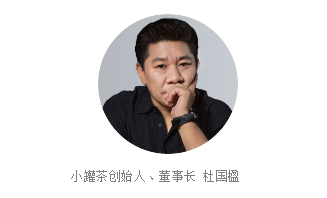
The first Dune Master Class focuses on New Forces of Consumption, featuring Alan Song, Chairman and Founding Partner of Harvest Capital, as the investor mentor, and Du Guoying, Founder and Chairman of Xiao Guan Tea, as the guest mentor.
Since 1995, Alan Song has worked at Everbright Securities and Guosen Securities, served as Director and CFO of Huatai Securities, and held roles as General Manager, Vice President, and CFO of Century Securities Investment Bank. He founded Harvest Capital in 2007 and has consistently practiced value‑investing principles, focusing on the major consumption and modern service industries while supporting the growth of China’s consumer sector.
Du Guoying has founded several well‑known brands, including Beibei Jia, Haoxing, E‑ren E‑shu, 8848 Titanium Mobile Phone, and Xiao Guan Tea. For Du Guoying, entrepreneurship is both a passion and a science—one that follows clear, logical principles.
This article highlights core insights from Alan Song on consumer investment, offering perspectives to help readers better understand the new consumption landscape.

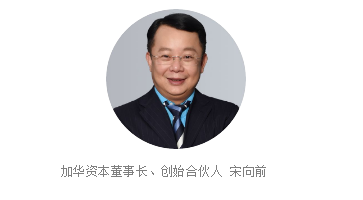
Since 1995, Mr. Song Xiangqian has worked in Everbright Securities and Guoxin Securities successively, served as director and chief financial officer of Huatai Securities, general manager, vice president and chief financial officer of Century Securities Investment Bank, and founded Jiahua Capital in 2007. Mr. Song Xiangqian has always practiced the concept of value investment, focused on large consumption and modern service industries, and insisted on empowering the development of Chinas consumer industry.
01 China Is Entering a New Era of Quality Consumption
Globally, economic development in countries like Germany and Japan shows that beyond the broad influence of real estate and finance, the consumer industry plays an equally critical role. Today, even as the global economic engine shifts, consumption’s contribution continues to grow.
In 2018, consumption contributed 76.2% to China’s economic growth. For China’s economy to advance steadily with both quality and scale under the “new normal,” and to meet the rising expectations of the people, the consumer industry’s importance is undeniable.
China is entering a new era of quality consumption. Competition among consumer brands is shifting from “how to meet unmet demand” to “how to better meet existing demand”—a transition from incremental to stock‑based growth. Entrepreneurs in the consumer sector must recognize the defining feature of our time: **the rise of the consumer.**
China is the world’s largest consumer market and one of the highest‑saving nations globally. The potential of its domestic consumer market far exceeds that of the United States. In a stock‑based game, our only viable choice is to promote the release of consumption potential.
With the advent of the 5G era, the consumer industry will undergo fundamental change. Faster speeds, higher efficiency, richer scenarios, and enhanced experiences will drive revolutionary upgrades across the sector.
Why Focus on Consumer Investment?
Since its founding in 2007, Harvest Capital has concentrated on the major consumer services sector for over 12 years. Simply put, we have worked diligently and focused exclusively on this field.
The firm currently manages more than RMB 10 billion and has successfully invested in dozens of leading enterprises in China’s consumption and service industries, including Taikang Insurance Group, Xiao Guan Tea, Easyhome, Aimer Group, Newpearl Group, Meitu, Didi Chuxing, Eastroc Beverage, Laiyifen, Boloni, Qiaqia Food, Jiajia Food, Babi Food, ORG Packaging, and Laoxiangji Catering.
Why did Harvest Capital choose to focus on consumer investment?
From a historical perspective, food and essentials are the foundation of people’s livelihoods. No matter how human civilization progresses, consumption remains an eternal theme, continually upgrading alongside societal advancement.
From an individual standpoint, everyone is a consumer at all times—making consumption a perpetually relevant investment arena.
From a macroeconomic view, China’s economic growth is driven by the “troika” of investment, consumption, and trade. In 2018, consumption’s contribution to economic growth reached a remarkable 76.2%.
Thus, focusing on and promoting consumption and investment aligns with the broader direction of China’s economic restructuring and industrial upgrading.
The Rise of the New Consumer
Today, the value of China’s workforce is shifting from “labor strength” to “labor intelligence,” with quantitative demographic dividends gradually transforming into qualitative advantages. While post‑50s, ‑60s, and ‑70s cohorts remain key customers for many consumer companies, building a world‑class product or enterprise requires looking toward the post‑80s, ‑90s, and ‑00s generations—understanding the consumption scenarios and emotional connections they value. Only then can China truly give rise to globally significant companies.
Post‑90s and post‑00s consumers are globally minded and largely well‑educated. They have more refined tastes, higher standards, greater educational attainment, and stronger independence. Facing these new consumers, companies can no longer rely solely on “high‑value, low‑cost” positioning. Product strength must prioritize quality, richness of features, and building strong associations from category to brand—a crucial path for new consumer companies to explore.
There is no doubt that consumers are rising, and the business environment has fundamentally changed. Navigating the balance between “the constants of human nature” and “the variables of business” is core to competitiveness for both entrepreneurs and investors.
Take Xiao Guan Tea as an example. Harvest Capital invested in the company in May 2018, largely because I deeply appreciate its business philosophy.
Tea products are notoriously difficult to scale—they are typically non‑standardized, and achieving scale is a major hurdle. Yet Du Guoying redefined “tea” for new consumers, turning it into a fast‑moving consumer good. Xiao Guan Tea continues to penetrate the market with this fast‑moving product mindset, capturing the attention of young consumers while addressing their needs for speed, fashion, convenience, and style.
Today’s Entrepreneurship Has Greater Momentum for Success
Barriers to entry in the consumer industry are low, but industry barriers are high.
For example, roasting sunflower seeds is easy to learn, but building a large‑scale, nationally recognized brand like “Qiaqia” is a different challenge. National champions in the consumer sector accumulate advantages in branding, marketing, distribution, management, and business models over long periods, creating differentiated competitiveness, core strengths, and higher barriers to competition.
Although industry barriers are high, there remains strong potential for new mega‑brands to emerge.
Was the market environment faced by Nestlé and Procter & Gamble over a century ago vastly different from today’s? There is nothing new under the sun; the fundamental logic of consumption has not changed. Moreover, the global population a century ago was just over 3 billion, while in 2019 it reached 7.7 billion—human consumption is growing at an accelerating pace. From the perspective of growth momentum, today’s entrepreneurial foundation is larger, making success perhaps more attainable.
The Consumer Sector Is More Likely to Produce Long‑Distance Champions
From 1957 to 2003, a period of economic turbulence in the U.S., 11 of the top 20 stocks by annualized returns came from the consumer sector—over 55%. In Japan, from 1992 to 2017, 8 of the 22 best‑performing stocks were consumer companies, accounting for nearly 40%. From a long‑term investment standpoint, returns in the consumer sector significantly outpace other sectors. Thus, the consumer industry is more likely to breed long‑distance champions.
Entrepreneurs should also recognize that China’s consumer industry as a whole is in a growth‑to‑maturity phase, playing a lasting “counter‑cyclical” role. The consumer sector is fertile ground for “Chinese giants,” and there is a clear “ratchet effect” upward in Chinese consumption.
In my view, China’s future will shift from “Made in China” to “Consumed in China,” transforming from the world’s factory into the world’s market. Chinese consumption will inevitably change China and influence the world. Investing in Chinese consumption means supporting China’s economic development.
02 Significant Opportunities Exist in High‑Frequency and Discretionary Consumption
Within the traditional consumer industry, substantial investment opportunities remain across three major areas: necessities, high‑frequency items, and discretionary goods—such as beverages, drinking water, apparel, and dining. In these essential, high‑frequency categories, China has yet to produce a world‑class company or one with over 5% market share. In other words, industry concentration remains very low.
From the perspective of industrial clustering, China will undoubtedly produce super‑sized global enterprises in various sub‑sectors. Take the dining industry: China’s dining market exceeds RMB 4 trillion in scale. The largest player, Haidilao, has a market cap exceeding RMB 160 billion but revenue of only about RMB 17 billion. Xibei, a leader in Chinese casual dining, has revenue around RMB 6–7 billion. Our portfolio company Laoxiangji, a national fast‑food chain leader with over 600 directly operated stores, generates revenue just above RMB 3 billion.
Can a RMB 4 trillion industry not support a company with RMB 50 billion in revenue? Given the carrying capacity of the Chinese market and the innovative spirit of its people, I believe it is not only possible but a matter of “who” and “when.”
Which Sub‑Sectors Offer Greater Investment Value?
In the consumer‑goods industry, which sub‑sectors hold more investment potential? In my view, the key is to identify those that have not yet formed a clear competitive landscape.
Industrial logic is central to Harvest Capital’s investment criteria. When I invest today, I look for companies that will not only still exist ten years later but will be stronger. In consumer goods, what kind of enterprises offer greater investment value? First, pricing power; second, differentiation; third, moats; and fourth, competitiveness.
If you study the consumer industry closely, you will see that small products can build big worlds. Young entrepreneurs and investors cannot ignore trends, but if trends do not translate into profitability, they betray the essence of entrepreneurship and investment. Simply put, trends are meaningless if they don’t make money. My logic is straightforward: do the right things and get them done; since it’s an investment, the goal is to earn returns—everything else is secondary.