

Milestones
"God Doesn't Roll the Dice" - Quarantine Diary (Part Three)
Date: 2022-03-16Views:
Written By Song Xiangqian (Alan Song)
CEO of Harvest Capital
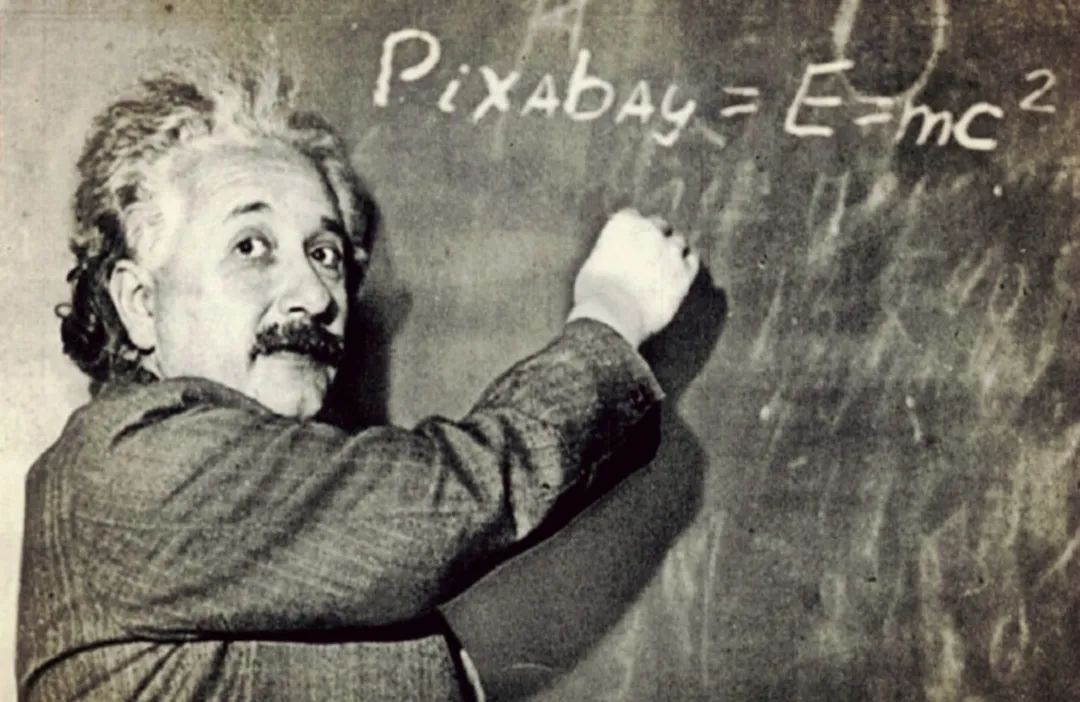
Einstein once said a famous quote: "God does not play dice." This means that the development of things has its probability.
01
Today, the market responded enthusiastically to regulatory speeches, and the rebound was quite considerable. The market seems to be reactivated. Many are eager to try, perhaps similar to the reaction after being isolated for too long—it's just a stress response. The market has become so weak that it has lost its observational ability, displaying the typical mentality of a drowning person who considers a straw as a gold bar.
The policies are warming up, which is undoubtedly a positive phenomenon. Recognizing the crisis is better than turning a blind eye. As Hayek once said, "What often turns a country into hell on earth is the attempt to build a heaven on earth." However, whether this correction touches the underlying logic, whether it is recognized by the international market, the capital market, and the livelihood of the people, all await observation over time. In the past, there was a lot of noise about the "private economy exit theory," and then the high-level meetings set the tone for encouragement. What happened afterward?
If we do not reflect on the underlying logic and some mistakes in the nearly trillion-dollar market value drop of Chinese concept stocks over the past year; do not think about the long-term and complex process of building a modern national governance system; do not optimize and improve scientific epidemic prevention, and humanized anti-epidemic measures; do not truly stand on the perspective of a community with a shared future for humanity to view the Russia-Ukraine conflict, earnestly resolve the China-US confrontation, responsibly address national issues and people's livelihood, and handle major and minor matters with a high degree of empathy, then today's rebound will ultimately be just a rebound, and bottom fishing will indeed turn into a household sweep, and stock trading may turn into a monastic life.

02
Pinning hopes on a speech to change the market's development trend is akin to hoping that a message in a friend's circle can change the world. The combination of the pandemic and the loss of trillions of dollars in Chinese concept stocks is arguably the most painful loss since the founding of the country. Isn't such a huge cost worth a nationwide reflection? Isn't it worth our serious summary? Otherwise, in real life, people always feel very confused—there is a prevailing atmosphere in society that the more effort is put into trivial matters, the more careless it becomes about important matters, and there is a mysterious atmosphere of "seeming to strive hard."
As a virtual economy, finance is essentially the confidence and expectations of both parties in a transaction about the future. Providing clear and stable long-term policy support to the market and giving the market a clean and transparent operating mechanism is the crux of the matter. Without long-termism, where is the doctrine? Without value, where will there be investment? Without stability, how can there be development? Without development, what about people's livelihood?
In the past 20 years, China's per capita GDP has grown tenfold, but the Chinese stock market, disappointingly, has seen little growth. Putting aside factors such as the compilation of composite indices and market dilution, smart money and market money have voted with their feet.

03
"Those who have perseverance have constant wealth, and those who have constant wealth must have perseverance." The wisdom of our ancestors is powerful enough. Starting with the "enduring and everlasting" social order and property rights system, posting notices of peace in the hearts of the people may be the greatest driving force for reform and the most significant concern of the people.
Stability is by no means maintained but achieved through the development and progress of society, politics, economy, and culture. Modern state governance requires not only substantial financial investment but also insight into public sentiment, alignment with public opinion, and understanding the people's hearts. Empathy is the best politics, and sympathy is the best communication.
The market does not believe in tears, but it believes in expectations. Only with sincere efforts for development, single-minded dedication to reform, wholehearted commitment to openness, and sincere planning for the people's lives and civil society—striving for "satisfying their food, beautifying their clothing, ensuring their residence, and following their customs"—can we encourage all market entities to grow equally. Achieving ownership neutrality, without artificially distinguishing and emphasizing the ownership differences and preferential treatment between state-owned and private, domestic and foreign, can create an unprecedented social consensus. Only then can we possibly recreate the flourishing golden era of the early years of reform and opening up. A harmonious society will naturally come about, and the great dream of national rejuvenation will be realized step by step.
Writing this article during isolation, I feel that the pen carries immense weight, and there are deep thoughts in my heart. Amidst countless changes, I pray for the future of our motherland to be as vast as the sea, and the days ahead to be long. How beautiful is our youthful China, eternal with the sky! How splendid are our young Chinese, boundless with the country!
Related information