

Milestones
Discriminating Against Consumption Will Bring Bitter Fruits to Technology 丨Pencil Road interview
Date: 2023-11-08Views:
The following is the essence of the dialogue.
Recently, due to questioning the business model of Inclusive Finance Enterprise Digu Tong, Song Xiangqian, founding partner of Harvest Capital, was pushed into the spotlight of public opinion.
He later stated that the criticism of Digu Tong was not for the sake of interests but out of concern for small and micro-enterprises and individual businesses. As the capillaries of China's economy, if they are "cut again," it may affect the fundamentals of the market economy.
As an investor focusing on the consumer sector, he has conducted research and retrospection on the consumer trends in the past seven or eight years, trying to discover the genes of failure and success in these entrepreneurial imprints, hoping to be prepared for the next round of explosive growth.
In Harvest Capital's Beijing office, Song Xiangqian exchanged views with Pencil on "consumption, hard technology, and new opportunities of the times." Song Xiangqian believes:
Song Xiangqian really likes a line from the movie "The Godfather": People who see through the essence in one second and those who cannot see the essence of a thing even after half a lifetime will inevitably have different destinies. He said that Chinese consumption lacks not participants and entrepreneurs but determination and perseverance in the pursuit of altruism.
Here are the highlights of the conversation.
1、Doing Business Requires Macro Research
Pencil: Is your mood better this year than before?
Song Xiangqian: My mood is better this year. I was more anxious in the past few years, like the tunnel effect, groping in the dark before seeing the light. This year, I see the light. The light is "high-quality growth," and it is getting closer to me.
An important meaning of "high-quality growth" is the shift from quantity to quality. Our previous GDP growth of over 10% (before 2010) created an economic miracle. However, such miracles cannot exist for a long time. After a short release, we will enter a period of slow growth. We need to accept this situation, and it may be a long-term situation. Therefore, our growth can no longer rely on quantity but should be quality. This is a painful period.
We can no longer rely on "quantity control," such as looser monetary policies and issuing more national debt. Our residents' per capita debt is now 140,000 yuan (as of the end of 2022), and corporate debt is even higher. In the future, we should diversify debt and deleverage more.
We should rely on "quality control," such as optimizing resource allocation, adjusting industrial structure, allocating resources to more efficient and technologically strong enterprises, letting them solve employment, and creating a good life for the people.
This requires us to persist in developing a market economy, creating a better business environment, and providing good legal protection, combined with various forms such as symposiums and new 36 measures. In this way, I believe there will be a turning point in the future.
You ask me why my mood has improved, and this is the reason.
In addition, there are many good things this year, such as the recovery of Sino-U.S. relations. When China and the United States are good, the world is good. When China and the United States are stable, the world is stable. When China and the United States are strong, the world is strong—cooperation is more important than competition. After a few years of wrist-wrestling competition, everyone realizes the importance of cooperation, even if it is maintained at the minimum level. The world cannot afford a huge disaster in Sino-U.S. relations. I hope there will be more good things like this, continue, and peaceful development will definitely be the mainstream of the world.
Pencil: You just mentioned the "painful period." Does it include the present?
Song Xiangqian: Yes, and this transformational painful period is very long. Our peers (investors, entrepreneurs, etc.) are not very willing to study macroeconomics. In China, macroeconomics is closely related to the fate of enterprises. We are a dual-structure economic entity: state-owned/private and domestic/foreign. Therefore, macroeconomic research has great foresight and leading significance.
Chinese entrepreneurs are a relatively hardworking group in the world. They not only need to do well in the micro-operation of enterprises but also need to have a keen analysis and judgment of the macroeconomic situation and development trends. Especially today, China's overall goals for economic and social development have placed national security in the primary position and prioritized fairness over efficiency. The entire society is indeed in a period of transformation in the face of unprecedented changes in a century. I believe this transformational painful period may last for 10-20 years.
Pencil: Does this painful period include changes in the mission of "mass entrepreneurship and innovation" now?
Song Xiangqian: The focus of "mass entrepreneurship and innovation" will also shift from "quantity" to "quality."
"Mass entrepreneurship and innovation" is a very good policy orientation, and I approve of it. But objectively speaking, it has indeed encountered major challenges in the past few years. In the business world, truly successful companies are still a minority. The formation of business talent and wisdom takes time; this is a process of sifting through the sand. In the future, "mass entrepreneurship and innovation" will become more of an elite movement rather than a mass movement.
The mission of entrepreneurs still exists. In developed countries such as Germany, Japan, France, etc., small and medium-sized enterprises support the national economy. In China, they account for nearly 50% of GDP.
In the future, we cannot rely entirely on large companies—such as Huawei, Alibaba, Tencent. Employment of a massive population cannot be entirely dependent on them. Therefore, "mass entrepreneurship and innovation" is an issue of the times.
The focus of this issue is: The direction of "mass entrepreneurship and innovation" is correct, but the future challenge is how to achieve high-quality "mass entrepreneurship and innovation" instead of rushing up, how to truly help small and medium-sized enterprises, and individual businesses settle and thrive, entrepreneurship, prosperity, success, and establishment.
Small and medium-sized entrepreneurs, individual businesses, and self-employed small enterprises will be the active market of China's future economy, absorbing massive employment, creating massive taxes, promoting economic development and social stability as stabilizers and ballasts. They are also the driving force for the healthy, orderly, and high-quality development of China's economy. The long-term stable development of any economy depends not on towering trees but on resilient small flowers and grass, which has been confirmed in the development of modern developed economies.
Pencil: Is it still a good time to start a business now?
Entrepreneurs should also remember that time is the scale of enterprise value, and profit is the by-product of doing the right thing. Only by persisting in continuous efforts can success be achieved.
Without consumption, technology will become a sourceless water.
Pencil: Starting from 2023, what dividends will the next generation of entrepreneurs have?
Song Xiangqian: The demographic dividend is gone, and the simple factor dividend is also gone. However, there is still an important dividend among the production factors, which is the institutional dividend.
China has a dual economy with state-owned and private enterprises, and domestic and foreign investments. If we can establish a fair competition law instead of treating certain entities differently, such as establishing a separate law for private enterprises or formulating some supportive policies, we should focus on creating a neutral competitive environment: market order is unified, and the rule of law environment is unified.
We have been emphasizing the construction of a unified large market, or equal status of market entities, neutral market competition, and a fair and legal competitive environment. It can release tremendous potential and elasticity. In the nearly forty years of the market economy, we need to recognize that market economy is not supported; it must develop and grow in market competition.
Since the reform and opening up in 1978, the core has been the release of institutional dividends. More importantly, it is the release of the business talent and ability of entrepreneurs by loosening society, loosening livelihoods, loosening the economy, and loosening entrepreneurs. The result is nearly thirty years of economic counterattack and rapid growth.
The government only needs to establish a fair competition environment, eliminate all ownership discrimination, loosen society, transform the functions of the government, implement the separation of government and enterprises, and withdraw from comprehensive participation in social and economic activities. This way, it can create huge dividends, which may be far superior to the demographic dividend and the market dividend from global division of labor.
This is why I have become optimistic because I see where the resilience and elasticity lie. China indeed still has cards to play, food in hand, and no panic in mind.
Pencil: How long does it take for the release of the "institutional dividend"?
Song Xiangqian: It takes time. It is a new thing, and our cognitive ability has limitations. In the market economy, we are still beginners. We have only been in the WTO for 22 years, and the resumption of the college entrance examination is just over 40 years.
Pencil: After the release of the "institutional dividend," how will it affect your industry?
Song Xiangqian: The main contradiction of the new era is the contradiction between the growing needs of the people for a better life and the imbalance and insufficiency of development. China's economic and social development will revolve around this theme.
The first is technological progress, seeking productivity from technological progress and increasing labor productivity.
Second, China is a country with a population of 1.4 billion. The common people have a desire for a better life, so we need to develop the consumer service industry and transition from a production-oriented society to a consumption-oriented society.
Previously, China's real estate and related industries accounted for nearly 17% of GDP (in 2020). Now that era of big fish and big water has passed, and we have entered an era of stock competition.
What will be the focus of the country next? Personally, I think it ultimately depends on the consumer service industry. In the third quarter of this year, the contribution rate of final consumption expenditure to economic growth reached 94.8%. In 2020-2022, this number was mostly between 50% and 70%.
This is an undeniable fact.
Although there are some challenges for consumer companies to go public at present, I think this is short-term. It is a policy that lacks long-term strategic vision. In the long run, by providing good products and services to the people, absorbing a large amount of employment, and creating a large amount of tax revenue, this is not only in line with the direction of social development advocated by the country but also helps solve the main contradictions in social development.
In the short term, the resources for capital market issuance (IPO) are limited, and it is reasonable to support bottlenecked technology companies. But in the long run, don't consumer and service industries need support and development? We cannot set consumption and technology against each other, making the market choose between them. On the contrary, technology and consumer service industry, as the pillar and supporting industries of the national economy, must and should develop well. We cannot implement discriminatory policies to maintain so-called development.
Consumption and technology are the two sides of economic and social development, and they are also the two most important elements in the national economy. One is technological progress, and the other is consumption support. Consumption creates application scenarios for technology.
For example, the AI Four Little Dragons, they are now serving the government (to G, meaning the government is the largest customer), but another thing that supports their survival is the consumer market. Consumer companies are customers of technology companies, they are the first party. Without consumer scenarios, how can technology companies survive?
Many technology companies, due to being decoupled from consumer companies, have caused two problems: one is declining revenue and plummeting stock prices; the other is not making money.
Why is Huawei's mobile phone good? Because it has a huge consumer population, it is essentially a consumer electronics industry. It can continuously achieve technological iteration and progress, provided there is massive consumer market support.
Look at companies like Google, Apple, or Tesla in the United States; they are essentially consumer companies. All technology is for ultimate application, and we should focus on people (consumers).
So consumption and technology are not in opposition, and there should be no discrimination. Policies should also be like this, not encouraging a choice between the two. For example, supporting technology does not mean not supporting consumption, and supporting consumption does not mean not supporting technology. Both should be coordinated and developed.
01
Running a Business, Macro Research Is Essential
Pencil Road: Is your mood better this year than before?
Song Xiangqian: Yes, my mood is better this year. I was more anxious in the past few years. It's like the tunnel effect, groping in the dark before seeing the light. This year, I see the light. The light is "high-quality growth," and it's getting closer to us.
One significant aspect of "high-quality growth" is the shift from quantity to quality. In the past, our GDP growth exceeded 10% (before 2010), creating an economic miracle. However, such miracles cannot exist for the long term. After a short-term release, we will enter a period of slow growth. We need to accept this situation, and it may be a long-term one. Therefore, our growth cannot rely on quantity anymore; it should be about quality. This is a painful period.
We can no longer rely on "quantity control," such as looser monetary policies and issuing more government bonds. Our residents now have a per capita debt of 140,000 yuan (as of the end of 2022), and corporate debt ratios are even higher. In the future, we should diversify debt and deleverage more.
We should rely on "quality control," optimizing resource allocation, adjusting industrial structure, and allocating resources to more efficient and technologically advanced enterprises. This way, they can address employment and create a better life for the people.
This requires us to adhere to the development of a market economy, create a better business environment, establish legal safeguards, and combine various forms such as forums and new policies. In doing so, I believe there will be a turning point in the future.
You asked why my mood has improved, and this is the reason.
Additionally, there are many positive things happening this year, such as the recovery of China-U.S. relations. When China and the U.S. are good, the world is good. When China and the U.S. are stable, the world is stable. When China and the U.S. are strong, the world is strong. Cooperation is more important than competition. After a few years of arm wrestling competition, everyone realizes the importance of cooperation, even if it is maintained at the minimum level. The world cannot afford a huge disaster in China-U.S. relations, and I hope there will be more good things like this, continuing on the path of peaceful development, which is sure to be the mainstream of the world.
Pencil Road: You mentioned the "painful period," does it include the current situation?
Song Xiangqian: Yes, and this transformational painful period is long. Our peers (investors, entrepreneurs, etc.) are not very willing to study macroeconomics. In China, macroeconomic conditions are closely related to the fate of enterprises. We are a binary economic entity: state-owned/private and domestic/foreign. Therefore, studying macroeconomics is very forward-looking and influential.
Chinese entrepreneurs are a relatively hardworking group globally. They need to excel in micro-enterprise operations while having a keen analysis and judgment of the macroeconomic situation and development trends. Especially today, China's overall development goals have placed national security as the top priority and prioritized fairness over efficiency. The entire society is indeed undergoing a transitional period in the face of a changing era unprecedented in a century. I believe this transitional painful period may last for 10-20 years.
Pencil Road: In this "painful period," will there be any changes in the mission of "mass entrepreneurship and innovation"?
Song Xiangqian: The focus of "mass entrepreneurship and innovation" will also shift from "quantity" to "quality."
"Mass entrepreneurship and innovation" is a good policy orientation, and I highly approve of it. However, objectively speaking, it has encountered significant challenges in recent years. In the business world, truly successful companies are still a minority. The formation of business talents and wisdom takes time, and it is a process of sifting through the sands. In the future, "mass entrepreneurship and innovation" will become more of an elite movement rather than a mass movement.
The mission of entrepreneurs remains. In developed countries like Germany, Japan, France, small and medium-sized enterprises support the national economy. In China, they account for nearly 50% of the GDP.
In the future, we cannot rely entirely on large companies like Huawei, Alibaba, and Tencent—employment for a massive population cannot solely rely on them. Therefore, "mass entrepreneurship and innovation" is a task for the times.
The focus of this issue is that the direction of "mass entrepreneurship and innovation" is correct, but the future challenge lies in how to carry out high-quality "mass entrepreneurship and innovation" rather than a rush. It is about genuinely helping small and medium-sized enterprises (SMEs), individual businesses, and self-employed entrepreneurs settle down and thrive in their ventures.
SMEs, individual entrepreneurs, and self-employed small businesses will be the active market players in China's future economy. They will absorb a massive workforce, generate significant tax revenue, and act as stabilizers and ballasts for economic development and social stability. They are the driving force for China's healthy, orderly, and high-quality economic development. In any economy, long-term stability and development rely not on towering trees but on resilient small flowers and grass, as confirmed by the development of modern advanced economies.
Pencil Road: Is it a good time to start a business now?
Song Xiangqian: From the current situation, it is a low point for entrepreneurship. Economic growth is slowing down, structural transformations are happening, and society is experiencing an unprecedented change in a century. However, in any period, there are no bad industries, only poorly managed companies. Even in declining industries, there are successful enterprises. For example, Pinduoduo and Douyin have adapted to the trends of the times and achieved remarkable success. While there may not be an era without entrepreneurs, there should be entrepreneurs of the era.
Pencil Road: Will the status of "mass entrepreneurship and innovation" become increasingly prominent in the future, or will it return to a reasonable position?
Song Xiangqian: I think it will return to rationality, back to reality.
Firstly, we need to activate the vitality of micro subjects, hoping that more people will come out to start businesses, making the economy more dynamic. However, as our economy has developed to the point of ranking second in the world by GDP, it should enter a deep reform phase.
We can no longer rely on quantity; the era of large-scale and abundant opportunities has passed. Entrepreneurship is more challenging now, and competition is fiercer. Many entrepreneurs focus on simple optimization of product features, improving consumer experiences, or tapping into emotional value points for entrepreneurship. This kind of entrepreneurship has a low threshold, weak structural competitive advantages, lacks roots and moats, making it susceptible to economic downturns and market competition. This effectively explains the challenges faced by China's "mass entrepreneurship and innovation" movement over the past 7-8 years.
Pencil Road: How do you evaluate the entrepreneurs of the "2015-2023" generation? Their "native families" are similar, and they have enjoyed similar era dividends and limitations.
Song Xiangqian: They are the first group of entrepreneurs in China to participate in "mass entrepreneurship and innovation," leaving a significant mark in business history. Historically, this generation of entrepreneurs will be recorded in China's business history.
They share some common characteristics: 1. They received a good education; 2. They have a strong enthusiasm for entrepreneurship; 3. They possess strong business knowledge, information, and business acumen, stronger than the first and second-generation entrepreneurs.
However, objectively speaking, they have focused more on the quantity than the quality of entrepreneurship. Taking consumption as an example, many companies rely on traffic for entrepreneurship, but this is only a method of commercial realization, fundamentally relying on channels. The core competitiveness of business still requires comprehensive capabilities, covering everything from production, research and development, operations, marketing to channels. Bluntly using traffic, relying on attention economics, capturing market realization dividends from human weaknesses, and hastily using long-term boards for entrepreneurship are at most businesses that earn cash flow, not genuine entrepreneurs.
Entrepreneurs should also remember that time is the scale for measuring the value of a business, and profit is the byproduct of doing the right things. Only by consistently making efforts will success be achieved and not easily abandoned.
02
Without consumption, technology will become a sourceless stream.
Pencil Road: Starting from 2023, what dividends will the next generation of entrepreneurs have?
Song Xiangqian: The demographic dividend is gone, and the simple factor dividend is also gone. However, there is still an important dividend in the production factors, and that is the institutional dividend.
China has a dual economy, with state-owned and private enterprises, as well as domestic and foreign capital. If we can establish fair competition legislation instead of treating certain types of entities differently, such as creating separate laws for private enterprises or implementing specific support policies, we should focus on creating a neutral competitive environment. The market order and legal environment should be unified.
We have always emphasized building a unified large market, equal market entity status, neutral market competition, and a fair and legal competitive environment. This can unleash enormous potential and resilience. After nearly forty years of market economy development, it is crucial to recognize that the market economy is not nurtured but grows and strengthens through market competition.
Starting from the reform and opening-up in 1978, the core has been the release of institutional dividends. More importantly, it is about loosening social constraints, easing people's livelihoods, liberalizing the economy, and unleashing the business talents and abilities of entrepreneurs. The result has been nearly thirty years of economic resurgence and high-speed growth.
The government only needs to establish a fair competitive environment, eliminate ownership discrimination, loosen society, transform government functions, implement the separation of government and enterprises, and withdraw from comprehensive participation in social economic activities. By providing social public goods and services, the government can create enormous dividends, which may surpass the demographic dividend and the market dividend from global division of labor.
This is why I am optimistic, as I see resilience and elasticity. China indeed still has cards to play, food in hand, and a calm mindset.
Pencil Road: How long will it take for the release of the "institutional dividend"?
Song Xiangqian: It takes time. It is a new thing, and our cognitive abilities have limitations. In terms of market economy, we are still beginners. We have only been in the WTO for 22 years, and the resumption of the college entrance examination is just over 40 years.
Pencil Road: After the release of the "institutional dividend," how will it affect your industry?
Song Xiangqian: The main contradiction in the new era is the contradiction between the growing desire for a better life among the people and the imbalanced and insufficient development. China's economic and social development will evidently revolve around this theme.
Firstly, there is technological progress to demand productivity improvement and increased labor productivity.
Secondly, China is a populous country with 1.4 billion people, and people have the desire for a better life. Therefore, there is a need to develop the consumption service industry and transition from a production-oriented society to a consumption-oriented society.
Previously, the real estate and related industries in China accounted for nearly 17% of GDP (in 2020). However, the era of abundant opportunities has passed, and we have entered the era of stock competition.
What will be the focus of the country next? I personally believe it will ultimately rely on the consumption service industry. In the third quarter of this year, the contribution of final consumption expenditure to economic growth was as high as 94.8%. In 2020-2022, this figure was mostly between 50% and 70%.
This is an undeniable fact.
Although there are some challenges for consumer companies to go public at present, I believe this is a short-term issue, a policy that lacks long-term strategic vision. In the long run, providing good products and services for the people, absorbing a massive workforce, and creating substantial tax revenue are not only in line with the country's advocated direction of social development but can also help address the major contradictions in social development.
In the short term, the issuance of resources in the capital market (IPO) is limited, and it is reasonable to support technology companies that are bottlenecks. However, in the long run, does the consumer and service industry not need support and development? We cannot pit consumption against technology, creating a "either-or" choice in the market. On the contrary, technology and the consumer service industry, as the pillars and supporting industries of the national economy, both need to and must be developed. Discriminatory policies should not be implemented to maintain so-called development.
Consumption and technology are two sides of the same coin in economic and social development. They are the two most important elements in the national economy: technological progress and consumption support. Consumption creates application scenarios for technology.
For example, the AI "Four Little Dragons" are currently serving the government (to G, where the government is the largest customer), but what supports their survival is the consumer market. Consumer companies are customers of technology companies, the first party. Without consumption scenarios, how can technology companies survive?
Many technology companies, due to decoupling from consumer companies, face two problems: declining revenue and stock price collapse, and the other is not making money.
Why is Huawei's smartphone successful? Because it has a massive consumer base; essentially, it is a consumer electronics industry. It can continuously achieve technological iteration and progress, provided it has the support of a huge consumer market.
Look at Google, Apple, or Tesla in the United States—they are essentially consumer companies. All technology is ultimately for application, and we should prioritize people (consumers).
So, consumption and technology are not opposing forces. We should not discriminate, such as looking down on consumption if focusing on technology or considering technology unreliable if focusing on consumption. Policies should also be coordinated and not encourage an "either-or" situation. We should support the coordinated development of both.
Pencil Road: Will the cost of discriminating against consumption ultimately be transmitted to the technology industry?
Song Xiangqian: Yes. Consumption creates employment and solves people's livelihood problems. Technology represents efficiency improvement but cannot solve mass employment. If everyone goes into technology, AI, computing power, big models, and chips, how many people can it employ? Are less educated workers not allowed to live?
We still need to develop the consumption service industry, absorb a massive workforce, and create substantial tax revenue. After taxes are collected by the government, the government will have more financial support for technological development and progress.
Without consumption, technology will not have a source of vitality, and vitality is created by consumption. How many people today can create such large tax revenue? It's the consumption industry. The contribution rate to economic growth is 90% created by consumption.
Can you say that the most significant industry is not important? Can you discriminate against it, preventing it from continuing to grow and strengthen in the capital market? Does China never need its own Coca-Cola, McDonald's, KFC, or Apple? Do you think companies like Huawei, Xiaomi, and NIO are not important?
Discriminating against consumption is inhibiting technology in reverse because technology will have no market and no application.
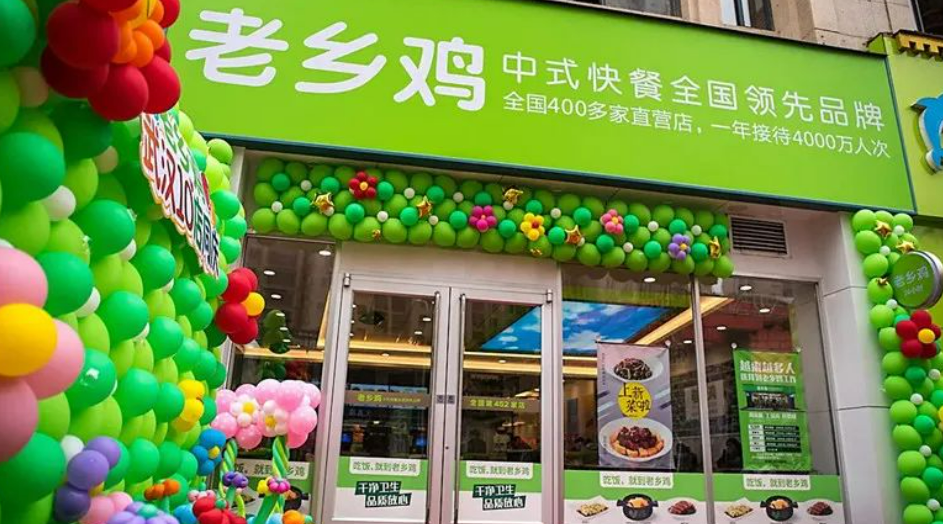
The "Laoxiangji" (Chinese-style fast-food brand) we invest in may seem like a traditional fast-food company on the surface, but it is, in fact, a highly digitized company. It has many innovations, such as smart stores, AI automatic checkout, and digital management of the entire industry chain, using a large number of new and digital technologies. If traditional companies like Laoxiangji do not undergo digital transformation and upgrading, how can chip companies and SaaS companies survive?
Pencil Road: Indeed, one of the pressures facing the technology industry is widespread losses.
Song Xiangqian: Because there are too few real and stable customers from the market. For example, most AI companies are to G—currently under significant pressure. For example, chip companies, their application scenarios are limited to a few: smartphones, automobiles, etc. These companies often experience significant stock fluctuations once they go public. If consumption doesn't develop, how can technology be applied and implemented?
Pencil Road: Do you think there is a bubble in the technology industry now?
Song Xiangqian: Bubbles are visible to the naked eye, and everyone knows it. Due to well-known reasons, society has not effectively regulated and reflected on the bubble-like and speculative development problems in technology. We faced many bottlenecks in the past, so encouraging technological innovation is correct. In the early stages of the development of new things, having bubbles is normal.
As a country aspiring to achieve high-level, high-quality development, we need to learn to control the bubble; we need to wipe off the foam and drink the coffee. Speculation and investment have always coexisted, but the focus should be on value investment. However, we cannot completely eliminate speculation, or it will reduce market liquidity.
Just like the stock market, there are both value investments and arbitrage-type funds. We need to conduct macro-prudent management, which essentially reduces market friction while maintaining active trading to ensure stability.
Pencil Road: Every industry has its cycles, and many people may be shaken by these cycles. For example, the consumer sector was booming before 2020, but it became sluggish in the second half of 2021. Have these market sentiments affected you?
Song Xiangqian: No. For over 16 years at Harvest Capital, we have consistently invested in "essential needs + high frequency + livelihood," especially in the consumption of infrastructure, rather than consumption upgrades (such as high-end consumption). Considering the current social contradictions, the basic livelihood needs of ordinary people have not been fully and effectively satisfied. Therefore, economic cycles have little impact on the directions we focus on.
Harvest Capital has been established for 16 years, and we have indeed experienced several cycles and eras of so-called dividends and trends, such as the real estate dividend, internet dividend, social e-commerce dividend, and AI dividend.
We have faced challenges, but we firmly believe that the development model of developed economies will ultimately shift from production-oriented to consumption-oriented. This is the greatest confidence and strategic determination in the Chinese economy—within the environment of high-quality development of the consumer service industry. This is the main contradiction and the largest dividend of the era.
We have such a large demand for employment, so many small and medium-sized enterprises, and such huge demand that has not been fully satisfied. The consumer track is broad enough, the cycle is long enough—typical long and broad runway covered in thick snow. Inject your heart, and leave the rest to time, do things correctly, and do the right things.
Consumption is an industry where knowledge accumulation can bring about the reuse of capabilities and is highly dependent on cognitive industries. We are not just a fund; we are also industry experts. Our goal is to become the second employee, external CEO, and business partner of the enterprise.
Consumer investment is also the most challenging because we invest in industry leaders. Once these companies establish their brands, representing profits and positive cash flow, it becomes easy for them to expand, and the investment arbitrage loses its effect.
But what do they really need? They need a horizontal level and the ability to co-manage.
So many years have passed, and we don't dare to say that we have become big. We only say that we can survive and have mastered unique methods to survive, forming our own investment style and cultural philosophy. To gain something, you have to do something. While gaining profits and returns under the sun, strive to create more significant value and win the respect of cooperation opportunities and professional dignity.
Pencil Road: If consumer entrepreneurship enters a new era, which "old models" are bidding farewell?
Song Xiangqian: The first one bidding farewell is the "new consumption" targeting the middle class.
I believe that China in the future will be similar to Japan, a market with insufficient effective demand.
Studying the improvement of purchasing power is a long-term topic. Japan experienced a "lost 30 years," and it only slowly started to grow last year. Our volume and structure determine that we face greater challenges. The population dividend is gone, the land resource dividend is gone, and we have entered the era of stock competition—insufficient effective demand, declining per capita purchasing power, and economic expectations changing from positive optimism to relatively conservative. People are tightening their purse strings.
Therefore, whether it's new consumption or middle-class consumption, I dare not say they will be completely wiped out, but the pressure will be immense. So, in the past, Harvest Capital has basically not focused on these directions.
The future may enter a low-desire society. In the past, we talked about big factories, big brands, and big circulation. In the future, consumers will emphasize personalization, consumption advocacy (such as simplicity, simplicity, etc.). They will not blindly pursue brands and will not be willing to blindly pay for new forms of consumption.
The mainstream trend of consumption will still revolve around basic necessities and livelihood consumption. Currently, there is a downturn in consumption demand, but it has not significantly impacted the business of Nongfu Spring, Jimaillang, Dongpeng Special Drinks, Babimantou, and Amo (enterprises invested by Harvest ). Why? Because our main investment direction revolves around "high frequency + essential needs + livelihood." These are all necessities, focusing on creating the welfare of extreme cost-effectiveness and consumer surplus.
When China's development model follows the same pattern as Japan in the next 20-30 years, consumer behavior will undergo tremendous changes. We need to proactively understand the market, adjust our investment layout to align with the demands of the times, and this is also a profound understanding of the cycle.
The mainstream trend of consumption cannot only focus on Beijing, Shanghai, and Guangzhou; this will mislead you. The 600 million middle and low-income groups and the 9 billion livelihood market are the real big markets, providing good products to meet the basic needs of ordinary people is the mainstream.
The actual per capita purchasing power of the middle class is not high. Now that real estate has come down, they have mortgages, car loans, and perhaps other consumer loans. In fact, they are a "soft stratum" or "soft middle class." They prefer to save money to pay off mortgages and may reduce consumption expenditures in the future based on expectations. All these situations will pose significant challenges to new consumption.
Pencil Road: So, regardless of economic fluctuations, the impact on "essential needs + high frequency + livelihood" will be minimal?
Song Xiangqian: Yes, because they revolve around basic needs. People cannot stop eating and drinking, right? We invest in buns that cost 1-2 yuan, drinks that cost 3-5 yuan, fast food that costs 20 yuan per meal, and regular meals that cost 60 yuan each.
We need to grasp the greatest common divisor. People cannot stop drinking water, right? Why does Nongfu Spring have potential? Because each person drinks two bottles (a month), and it becomes a company with a market value of 500 billion. If each person drinks four bottles, it would be even more remarkable.
Recently, the founder of Nongfu Spring, Zhong Shanshan, became the richest person in China again (for the third time), and there is a reason for that. The most extensive market is created by the largest consumer group that supports it.
Pencil Road: The term "new consumption" has been mentioned for 7-8 years. Is the view on "essential needs + high frequency + livelihood" currently an industry consensus or not?
Song Xiangqian: It has now become a consensus topic, but it is challenging to invest in brands and large-scale consumption related to "essential needs + high frequency + livelihood." As an investor, when you see these enterprises, they are already quite large. Only industrial investors can help them grow and gain some opportunities for co-construction. To truly help them, grow with them, you need to have the patience for long-term investment.
Pencil Road: How did Harvest Capital discover and invest in these early-stage companies?
Song Xiangqian: We started early, focusing on branded essential consumer goods, especially in the fast-moving consumer goods (FMCG) industry, sixteen years ago. Secondly, we have sufficient accumulations, such as learning and capabilities. Excellent enterprises are selective; they are looking for a business partner, and money is, in fact, a byproduct. Financing is about "financing wisdom." It's about the integration and extension of the original intention of entrepreneurship. There is indeed nothing new under the sun, but starting from the humble, bursting with strong vitality, is very contrary to human nature. It tests patience and fate. Arbitrage and short-term thinking have never been great companions.
Pencil Road: Although the entrepreneurial achievements of consumption upgrades have not been satisfactory in the past few years, are there 1-2 companies that you consider outstanding?
Song Xiangqian: Yuanqi Senlin (元气森林) can be considered one. Its product strength is relatively good, and it has a higher market insight than traditional consumer companies. For example, sugar-free sparkling water objectively created a new category in the Chinese soft drink market. In addition, it has mastered the capabilities of social e-commerce and has a thorough understanding of new channels, new audiences, and new channels. However, their development also faces challenges, as Tang Zong mentioned: Yuanqi Senlin needs time and needs to become a traditional FMCG company, filling in capabilities such as production, supply chain, and channel management.
For a great company, the weaknesses can largely determine the start, but strategic capabilities, operational level, and the development determination with patience truly determine the future of the enterprise. A consumer-centric company, starting from the relationship among people, goods, and venues, always cultivates the user's lifelong value, which is a structural competitive advantage. It is a high-dimensional competitive advantage of knowing and acting in one, which can be explained in three words, but it is challenging to achieve. It is a high-dimensional wisdom of knowing and acting.
Nowadays, the essence of business competition is the entrepreneur's cognition, the entrepreneur's mentality, and the spirit of altruism. When starting a business, a long board can make you develop rapidly. However, to become a long-term and continuous winner, you need to train with the mentality of altruism-driven shortboard and internal power. This kind of reflexivity will significantly impede the development of the enterprise in the short term, creating significant obstacles. In the long run, it is a high-dimensional wisdom of planning and moving.
Pencil Road: In the consumer industry, are there any opposing opinions hindering the development of the ecosystem?
Song Xiangqian: Of course, there are, such as new consumption and traditional consumption; there is some opposition now. For example, a certain ice cream might say it is not selling ice cream. But no matter what method, what character setting, what emotional value release, in the end, you are still selling ice cream. Good products will speak for themselves, and the market will ultimately reward honest and trustworthy innovators. Most people only use the ability of social e-commerce, MCN methods, and new channels. New consumption and traditional consumption are not incompatible; there should not be too much word-making and market noise. Everyone is in the same industry, doing consumer industries. Traditional consumption should learn from innovative consumption on how to use digital economy, MCN, and flow economy to develop rapidly. Innovative consumption needs to learn how to produce, research and develop, and manage the supply chain, etc.
Pencil Road: In the past, VCs could lift sedan chairs and get many companies listed in a short time. However, over the past 7-8 years, few new consumer brands have gone public. Why can't VCs lift them anymore?
Song Xiangqian: Because most new consumer companies are basically channel-based companies, strictly speaking, they are not modern enterprises with complete industrial capabilities. For example, Diaries (某个雪糕), Somi (某子), a certain ice cream, and certain cakes—its research and development, production, and logistics are highly dependent on outsourcing. It is not a vertically integrated company with comprehensive competitiveness and strength, only possessing a single skill, such as being good at using new channels, but not so strong in terms of production, logistics, warehousing, and channels.
So, many new consumer companies are short-lived. They rely on beautifying packaging, simply emphasizing cost-effectiveness or substituting concepts. They focus on emotional value, functional iteration, and pain point marketing in the marketing process. In the short term, they can attract consumers, but they cannot win the compounding value of time in the long term. Essentially, the business world is rooted in repurchase. The dividend of human nature is the real value and the greatest wealth.
Secondly, any consumer goods and service industry have its inherent life cycle. Only large companies can continuously iterate and refresh. To some extent, the secret of traditional powerful brands' competitiveness lies here. This allows many seemingly unremarkable and unremarkable traditional large enterprises to ultimately win in the market competition.
Pencil Road: We noticed that some county-level enterprises that are very close to people's livelihoods, such as a konjac-selling company in Hubei (一致魔芋), can now go public.
Song Xiangqian: In the future, this will be a quite common phenomenon. In China, there are many hidden champions in segmented industries, which may be regional economic kings and industry champions. China's consumer market is large, with more than 2,800 counties and nearly 30,000 towns. The distribution of per capita purchasing power is uneven, and consumers in different regions have their preferences. For example, Dayao Soda, which started in Inner Mongolia, can generate several billion in revenue.
Capital discover and invest in these early-stage companies?
Song Xiangqian: We started early, focusing on branded essential consumer goods, especially in the fast-moving consumer goods (FMCG) industry, sixteen years ago. Secondly, we have sufficient accumulations, such as learning and capabilities. Excellent enterprises are selective; they are looking for a business partner, and money is, in fact, a byproduct. Financing is about "financing wisdom." It's about the integration and extension of the original intention of entrepreneurship. There is indeed nothing new under the sun, but starting from the humble, bursting with strong vitality, is very contrary to human nature. It tests patience and fate. Arbitrage and short-term thinking have never been great companions.
Pencil Road: Although the entrepreneurial achievements of consumption upgrades have not been satisfactory in the past few years, are there 1-2 companies that you consider outstanding?
Song Xiangqian: Yuanqi Senlin (元气森林) can be considered one. Its product strength is relatively good, and it has a higher market insight than traditional consumer companies. For example, sugar-free sparkling water objectively created a new category in the Chinese soft drink market. In addition, it has mastered the capabilities of social e-commerce and has a thorough understanding of new channels, new audiences, and new channels. However, their development also faces challenges, as Tang Zong mentioned: Yuanqi Senlin needs time and needs to become a traditional FMCG company, filling in capabilities such as production, supply chain, and channel management.
For a great company, the weaknesses can largely determine the start, but strategic capabilities, operational level, and the development determination with patience truly determine the future of the enterprise. A consumer-centric company, starting from the relationship among people, goods, and venues, always cultivates the user's lifelong value, which is a structural competitive advantage. It is a high-dimensional competitive advantage of knowing and acting in one, which can be explained in three words, but it is challenging to achieve. It is a high-dimensional wisdom of knowing and acting.
Nowadays, the essence of business competition is the entrepreneur's cognition, the entrepreneur's mentality, and the spirit of altruism. When starting a business, a long board can make you develop rapidly. However, to become a long-term and continuous winner, you need to train with the mentality of altruism-driven shortboard and internal power. This kind of reflexivity will significantly impede the development of the enterprise in the short term, creating significant obstacles. In the long run, it is a high-dimensional wisdom of planning and moving.
Pencil Road: In the consumer industry, are there any opposing opinions hindering the development of the ecosystem?
Song Xiangqian: Of course, there are, such as new consumption and traditional consumption; there is some opposition now. For example, a certain ice cream might say it is not selling ice cream. But no matter what method, what character setting, what emotional value release, in the end, you are still selling ice cream. Good products will speak for themselves, and the market will ultimately reward honest and trustworthy innovators. Most people only use the ability of social e-commerce, MCN methods, and new channels. New consumption and traditional consumption are not incompatible; there should not be too much word-making and market noise. Everyone is in the same industry, doing consumer industries. Traditional consumption should learn from innovative consumption on how to use digital economy, MCN, and flow economy to develop rapidly. Innovative consumption needs to learn how to produce, research and develop, and manage the supply chain, etc.
Pencil Road: In the past, VCs could lift sedan chairs and get many companies listed in a short time. However, over the past 7-8 years, few new consumer brands have gone public. Why can't VCs lift them anymore?
Song Xiangqian: Because most new consumer companies are basically channel-based companies, strictly speaking, they are not modern enterprises with complete industrial capabilities. For example, Diaries (某个雪糕), Somi (某子), a certain ice cream, and certain cakes—its research and development, production, and logistics are highly dependent on outsourcing. It is not a vertically integrated company with comprehensive competitiveness and strength, only possessing a single skill, such as being good at using new channels, but not so strong in terms of production, logistics, warehousing, and channels.
So, many new consumer companies are short-lived. They rely on beautifying packaging, simply emphasizing cost-effectiveness or substituting concepts. They focus on emotional value, functional iteration, and pain point marketing in the marketing process. In the short term, they can attract consumers, but they cannot win the compounding value of time in the long term. Essentially, the business world is rooted in repurchase. The dividend of human nature is the real value and the greatest wealth.
Secondly, any consumer goods and service industry have its inherent life cycle. Only large companies can continuously iterate and refresh. To some extent, the secret of traditional powerful brands' competitiveness lies here. This allows many seemingly unremarkable and unremarkable traditional large enterprises to ultimately win in the market competition.
Pencil Road: We noticed that some county-level enterprises that are very close to people's livelihoods, such as a konjac-selling company in Hubei (一致魔芋), can now go public.
Song Xiangqian: In the future, this will be a quite common phenomenon. In China, there are many hidden champions in segmented industries, which may be regional economic kings and industry champions. China's consumer market is large, with more than 2,800 counties and nearly 30,000 towns. The distribution of per capita purchasing power is uneven, and consumers in different regions have their preferences. For example, Dayao Soda, which started in Inner Mongolia, can generate several billion in revenue.
Capital discover and invest in these early-stage companies?
Song Xiangqian: We started early, focusing on branded essential consumer goods, especially in the fast-moving consumer goods (FMCG) industry, sixteen years ago. Secondly, we have sufficient accumulations, such as learning and capabilities. Excellent enterprises are selective; they are looking for a business partner, and money is, in fact, a byproduct. Financing is about "financing wisdom." It's about the integration and extension of the original intention of entrepreneurship. There is indeed nothing new under the sun, but starting from the humble, bursting with strong vitality, is very contrary to human nature. It tests patience and fate. Arbitrage and short-term thinking have never been great companions.
Pencil Road: Although the entrepreneurial achievements of consumption upgrades have not been satisfactory in the past few years, are there 1-2 companies that you consider outstanding?
Song Xiangqian: Yuanqi Senlin (元气森林) can be considered one. Its product strength is relatively good, and it has a higher market insight than traditional consumer companies. For example, sugar-free sparkling water objectively created a new category in the Chinese soft drink market. In addition, it has mastered the capabilities of social e-commerce and has a thorough understanding of new channels, new audiences, and new channels. However, their development also faces challenges, as Tang Zong mentioned: Yuanqi Senlin needs time and needs to become a traditional FMCG company, filling in capabilities such as production, supply chain, and channel management.
For a great company, the weaknesses can largely determine the start, but strategic capabilities, operational level, and the development determination with patience truly determine the future of the enterprise. A consumer-centric company, starting from the relationship among people, goods, and venues, always cultivates the user's lifelong value, which is a structural competitive advantage. It is a high-dimensional competitive advantage of knowing and acting in one, which can be explained in three words, but it is challenging to achieve. It is a high-dimensional wisdom of knowing and acting.
Nowadays, the essence of business competition is the entrepreneur's cognition, the entrepreneur's mentality, and the spirit of altruism. When starting a business, a long board can make you develop rapidly. However, to become a long-term and continuous winner, you need to train with the mentality of altruism-driven shortboard and internal power. This kind of reflexivity will significantly impede the development of the enterprise in the short term, creating significant obstacles. In the long run, it is a high-dimensional wisdom of planning and moving.
Pencil Road: In the consumer industry, are there any opposing opinions hindering the development of the ecosystem?
Song Xiangqian: Of course, there are, such as new consumption and traditional consumption; there is some opposition now. For example, a certain ice cream might say it is not selling ice cream. But no matter what method, what character setting, what emotional value release, in the end, you are still selling ice cream. Good products will speak for themselves, and the market will ultimately reward honest and trustworthy innovators. Most people only use the ability of social e-commerce, MCN methods, and new channels. New consumption and traditional consumption are not incompatible; there should not be too much word-making and market noise. Everyone is in the same industry, doing consumer industries. Traditional consumption should learn from innovative consumption on how to use digital economy, MCN, and flow economy to develop rapidly. Innovative consumption needs to learn how to produce, research and develop, and manage the supply chain, etc.
Pencil Road: In the past, VCs could lift sedan chairs and get many companies listed in a short time. However, over the past 7-8 years, few new consumer brands have gone public. Why can't VCs lift them anymore?
Song Xiangqian: Because most new consumer companies are basically channel-based companies, strictly speaking, they are not modern enterprises with complete industrial capabilities. For example, Diaries (某个雪糕), Somi (某子), a certain ice cream, and certain cakes—its research and development, production, and logistics are highly dependent on outsourcing. It is not a vertically integrated company with comprehensive competitiveness and strength, only possessing a single skill, such as being good at using new channels, but not so strong in terms of production, logistics, warehousing, and channels.
So, many new consumer companies are short-lived. They rely on beautifying packaging, simply emphasizing cost-effectiveness or substituting concepts. They focus on emotional value, functional iteration, and pain point marketing in the marketing process. In the short term, they can attract consumers, but they cannot win the compounding value of time in the long term. Essentially, the business world is rooted in repurchase. The dividend of human nature is the real value and the greatest wealth.
Secondly, any consumer goods and service industry have its inherent life cycle. Only large companies can continuously iterate and refresh. To some extent, the secret of traditional powerful brands' competitiveness lies here. This allows many seemingly unremarkable and unremarkable traditional large enterprises to ultimately win in the market competition.
Pencil Road: We noticed that some county-level enterprises that are very close to people's livelihoods, such as a konjac-selling company in Hubei (一致魔芋), can now go public.
Song Xiangqian: In the future, this will be a quite common phenomenon. In China, there are many hidden champions in segmented industries, which may be regional economic kings and industry champions. China's consumer market is large, with more than 2,800 counties and nearly 30,000 towns. The distribution of per capita purchasing power is uneven, and consumers in different regions have their preferences. For example, Dayao Soda, which started in Inner Mongolia, can generate several billion in revenue.
Capital discover and invest in these early-stage companies?
Song Xiangqian: We started early, focusing on branded essential consumer goods, especially in the fast-moving consumer goods (FMCG) industry, sixteen years ago. Secondly, we have sufficient accumulations, such as learning and capabilities. Excellent enterprises are selective; they are looking for a business partner, and money is, in fact, a byproduct. Financing is about "financing wisdom." It's about the integration and extension of the original intention of entrepreneurship. There is indeed nothing new under the sun, but starting from the humble, bursting with strong vitality, is very contrary to human nature. It tests patience and fate. Arbitrage and short-term thinking have never been great companions.
Pencil Road: Although the entrepreneurial achievements of consumption upgrades have not been satisfactory in the past few years, are there 1-2 companies that you consider outstanding?
Song Xiangqian: Yuanqi Senlin (元气森林) can be considered one. Its product strength is relatively good, and it has a higher market insight than traditional consumer companies. For example, sugar-free sparkling water objectively created a new category in the Chinese soft drink market. In addition, it has mastered the capabilities of social e-commerce and has a thorough understanding of new channels, new audiences, and new channels. However, their development also faces challenges, as Tang Zong mentioned: Yuanqi Senlin needs time and needs to become a traditional FMCG company, filling in capabilities such as production, supply chain, and channel management.
For a great company, the weaknesses can largely determine the start, but strategic capabilities, operational level, and the development determination with patience truly determine the future of the enterprise. A consumer-centric company, starting from the relationship among people, goods, and venues, always cultivates the user's lifelong value, which is a structural competitive advantage. It is a high-dimensional competitive advantage of knowing and acting in one, which can be explained in three words, but it is challenging to achieve. It is a high-dimensional wisdom of knowing and acting.
Nowadays, the essence of business competition is the entrepreneur's cognition, the entrepreneur's mentality, and the spirit of altruism. When starting a business, a long board can make you develop rapidly. However, to become a long-term and continuous winner, you need to train with the mentality of altruism-driven shortboard and internal power. This kind of reflexivity will significantly impede the development of the enterprise in the short term, creating significant obstacles. In the long run, it is a high-dimensional wisdom of planning and moving.
Pencil Road: In the consumer industry, are there any opposing opinions hindering the development of the ecosystem?
Song Xiangqian: Of course, there are, such as new consumption and traditional consumption; there is some opposition now. For example, a certain ice cream might say it is not selling ice cream. But no matter what method, what character setting, what emotional value release, in the end, you are still selling ice cream. Good products will speak for themselves, and the market will ultimately reward honest and trustworthy innovators. Most people only use the ability of social e-commerce, MCN methods, and new channels. New consumption and traditional consumption are not incompatible; there should not be too much word-making and market noise. Everyone is in the same industry, doing consumer industries. Traditional consumption should learn from innovative consumption on how to use digital economy, MCN, and flow economy to develop rapidly. Innovative consumption needs to learn how to produce, research and develop, and manage the supply chain, etc.
Pencil Road: In the past, VCs could lift sedan chairs and get many companies listed in a short time. However, over the past 7-8 years, few new consumer brands have gone public. Why can't VCs lift them anymore?
Song Xiangqian: Because most new consumer companies are basically channel-based companies, strictly speaking, they are not modern enterprises with complete industrial capabilities. For example, Diaries (某个雪糕), Somi (某子), a certain ice cream, and certain cakes—its research and development, production, and logistics are highly dependent on outsourcing. It is not a vertically integrated company with comprehensive competitiveness and strength, only possessing a single skill, such as being good at using new channels, but not so strong in terms of production, logistics, warehousing, and channels.
So, many new consumer companies are short-lived. They rely on beautifying packaging, simply emphasizing cost-effectiveness or substituting concepts. They focus on emotional value, functional iteration, and pain point marketing in the marketing process. In the short term, they can attract consumers, but they cannot win the compounding value of time in the long term. Essentially, the business world is rooted in repurchase. The dividend of human nature is the real value and the greatest wealth.
Secondly, any consumer goods and service industry have its inherent life cycle. Only large companies can continuously iterate and refresh. To some extent, the secret of traditional powerful brands' competitiveness lies here. This allows many seemingly unremarkable and unremarkable traditional large enterprises to ultimately win in the market competition.
Pencil Road: We noticed that some county-level enterprises that are very close to people's livelihoods, such as a konjac-selling company in Hubei (一致魔芋), can now go public.
Song Xiangqian: In the future, this will be a quite common phenomenon. In China, there are many hidden champions in segmented industries, which may be regional economic kings and industry champions. China's consumer market is large, with more than 2,800 counties and nearly 30,000 towns. The distribution of per capita purchasing power is uneven, and consumers in different regions have their preferences. For example, Dayao Soda, which started in Inner Mongolia, can generate several billion in revenue.
Related information