

Milestones
It's not that the "Shanghai experience" is wrong; rather, there is a need to "rethink" Omicron.
Date: 2022-04-07Views:
The following article is from Adam Smith Economics, written by Liu Shengjun.
· The full text is 3000 words in total, with an estimated reading time of about 6 minutes.
· Source: Adam Smith Economics (Produced by Liu Shengjun Microfinance)

01
Two months ago, the city of Shanghai, known as the "Magic City," listed a milk tea shop as the smallest "medium-risk area" in China, winning numerous praises. What garnered the praise? It was the scientific and precise epidemic prevention tactics and the concept of epidemic prevention at the minimum cost.
To achieve a balance between epidemic prevention and economic development, scientific precision is the key.
"Scientific precision" was explicitly emphasized in the Government Work Report during the Two Sessions of 2022. On March 17, the Standing Committee of the Political Bureau of the Central Committee further stated, "Adhere to scientific precision, dynamically clear cases, quickly curb the spread of the epidemic... Coordinate epidemic prevention and control with economic and social development, take more effective measures, strive to achieve the maximum prevention and control effect with the minimum cost, and minimize the impact of the epidemic on economic and social development."
It should be said that Shanghai, as China's economic and financial center, the most international metropolis, bears the hope of "scientific precision in epidemic prevention." Exactly because of this, the "strong impact" of this round of the epidemic in March seemed unexpected.
For a moment, Shanghai went from being a model to becoming the target of ridicule as a "jokester."
In fact, Shanghai did not fail—faced with a once-in-a-century pandemic, humanity can only learn and improve from mistakes. Every learning process has its curve, and every exploration involves risks. Shanghai's courage to explore "precision epidemic prevention" is worthy of respect.
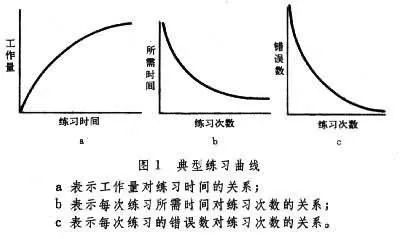
Certainly, Shanghai cannot avoid facing its problems and shortcomings bravely; only by doing so can it do better in the future.
Indeed, Shanghai has many issues that need to be summarized and reflected upon: the "blanket lockdown" approach causing delays in hospital treatment and the death of nurse Zhou Shengni from Dongfang Hospital, elderly individuals refused assistance by 120 emergency vehicles leading to their death, delayed supply of materials, crowding of medical resources, and exhausted healthcare workers dealing with lively asymptomatic carriers. As Shanghai's Secretary-General Ma Chunlei put it:
Faced with the highly infectious and elusive Omicron variant, our understanding is insufficient; our preparations are not adequately thorough for the significant increase in infections; at the same time, some prevention and control measures are not well-implemented, and in some lockdown areas, residents' life support is not thoughtful enough. We sincerely accept everyone's criticism and are working hard to improve.
In such times, what matters most is not criticism, mockery, or complaints, but understanding the problems and pointing the way forward. The real questions we should be asking are: why did Shanghai's precision model fail this time? What is the future path for epidemic prevention?
02
To see the road ahead, it is essential to understand the reasons behind the failure of Shanghai's precision model.
First, the most critical reason is the evolution of the virus. The reason why the Shanghai model failed is mainly due to three characteristics of the Omicron BA.2 variant: 1) an R0 value of 9.5, meaning one person can infect 10 others, while the early strains in early 2020 had an R0 value of approximately 2.5-3; 2) the incubation period between generations is also shortening, with roughly 3 days needed for one generation. If a patient has ample contact with others, they could infect 1000 people in 10 days; 3) due to the evolution of the virus and vaccine dissemination, asymptomatic cases have significantly increased, with asymptomatic carriers accounting for as much as 98% in Shanghai's current epidemic. It is challenging to detect these asymptomatic cases through the traditional "precision model." Shanghai has administered a total of 55.49 million doses of the COVID-19 vaccine, with 22.42 million individuals completing the full vaccination, covering 95.1% of the city's permanent residents, including 10.63 million people receiving booster shots.
The most significant lesson Shanghai learned from the breach of its defense is that the "precision model" proved inadequate in the race against Omicron BA.2. We must admit that facing Omicron BA.2, the traditional "lockdown model" may be more effective than Shanghai's scientific precision. This is undoubtedly a painful process of reevaluation.
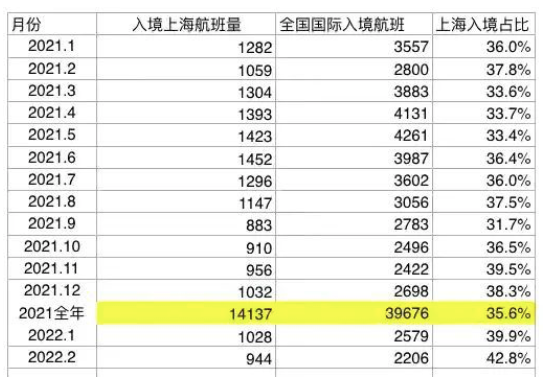
Second, Shanghai is a major destination for imported cases, increasing its risk. Against the backdrop of implementing "dynamic clearance" domestically, imported cases have become the primary cause of domestic outbreaks. Throughout the last year, Shanghai bore over 35% of the total international flights. The Huating Hotel, which triggered this wave of the epidemic, is a hotel used for quarantine.
03
An unavoidable question is: What should be done next?
Rao Yi, the President of Capital Medical University, analyzed the pros and cons of four choices:

【一】Continuation of the current method: The current dynamic zero-COVID strategy is more about waiting while persisting, exchanging time for space. Firstly, it involves waiting for the disappearance of the novel coronavirus. However, except for divine intervention, no one can predict when this moment will arrive. Secondly, it involves waiting for a vaccine with particularly effective preventive effects. Unfortunately, the "Omicron" variant has actually breached the protection of the majority of existing vaccines. Thirdly, it involves waiting for drugs with particularly effective treatment effects. The timeline for the development of a drug that can completely treat COVID-19 is also unpredictable.
【二】Seizing the opportunity presented by "Omicron" to open up: This is currently one of the most widely advocated views. It suggests that since Western countries have generally opened up and "Omicron" causes mild symptoms, China should immediately open up, use the mildly symptomatic but highly transmissible "Omicron" as a substitute for vaccines, and achieve herd immunity. The flaw in this view lies in the question: If a large number of people in China become infected with "Omicron" after the opening up, could it mutate into a variant with greater harm? If so, how do we eliminate the potentially severe consequences of welcoming a large number of wolves into our house? Unless it can be guaranteed that "Omicron" is the last mutation, adopting the perspective of seizing the opportunity presented by "Omicron" is not worth considering.
Recently, the UK has identified 637 cases of the XE variant (a recombination of Omicron BA.1 and BA.2). WHO Director-General Tedros Adhanom Ghebreyesus stated on March 30th, "Current studies indicate that the most likely scenario is that the new coronavirus will continue to evolve, but as human immunity increases due to vaccination or viral infection, the severity of diseases caused by the new coronavirus will decrease over time."
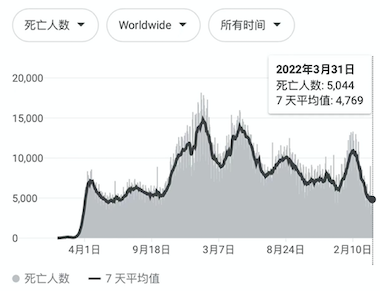
In addition, as of March 31st, Hong Kong has confirmed 1.14 million cases (15% of Hong Kong's population of 7.5 million) and 7,612 deaths in its fifth wave of the pandemic since the beginning of the year. If we simply extrapolate this confirmed case rate to China's population of 1.4 billion, the death toll corresponding to a 15% confirmed rate would be as high as 1.42 million (and this is only the death toll for a specific period). This implies that China's COVID-19 death toll will exceed the 1 million cases in the United States.
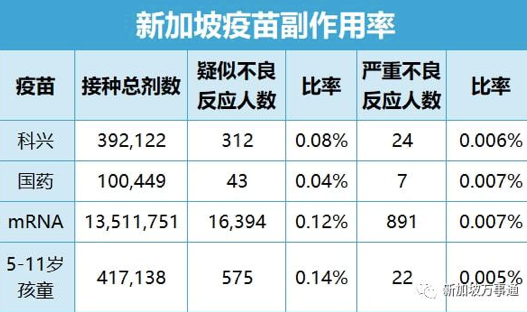
【三】Opening up after promoting foreign RNA vaccines: RNA vaccines have been widely recognized as the best in responding to the novel coronavirus, particularly in reducing symptoms and lowering mortality rates. However, RNA vaccines face challenges: 1) Individuals who have received existing RNA vaccines can still be infected with Omicron. 2) The main obstacle to promoting RNA vaccines in China is not what some people believe is China's face-saving attitude but rather concerns about their side effects.
【四】Opening up after popularizing inactivated vaccines in China: Data from Hong Kong shows that comparing the most widely used RNA vaccines abroad with China's most widely used Sinopharm inactivated vaccines, foreign vaccines perform better before the second dose, and after the third dose, both are around 98% effective in alleviating symptoms and reducing mortality rates. This means that China has a good chance of overcoming the epidemic by strengthening vaccine coverage.
04: Conclusion and Recommendations
1. For China, abandoning the "dynamic zero-COVID" strategy at this point still poses too much risk. Although COVID-related deaths are predominantly among the elderly, in a society like China with a "family culture," accepting "natural selection" for the elderly is ethically difficult to bear.

2. Accelerating the widespread distribution of vaccines (especially targeting the elderly) to create conditions for "future relaxation" is the most realistic path.
3. Optimizing tactics: In the event of a significant increase in "asymptomatic carriers," implementing home isolation for them to prevent the overcrowding of medical resources is a direction worth exploring. Home isolation should also be considered for close contacts and mild patients instead of centralized isolation. The difficulty of home isolation lies in ensuring that isolated individuals do not go out and contribute to the spread. The incident of a Shanghai milk tea shop spreading the virus during home isolation was precisely due to going out.
4. Carefully assessing the reasonable value of using makeshift hospitals: Using makeshift hospitals to isolate close contacts may lead to concentrated transmission within the facility. If makeshift hospitals are used to isolate asymptomatic or mild patients, it may also result in patients being infected with different variants of the new coronavirus, becoming a breeding ground for further virus mutations.

5、While mass testing is unavoidable in the event of an epidemic outbreak, it should not be excessively utilized. For Omicron BA.2, which has a short incubation period and high transmissibility, mass testing may lead to cross-infections.
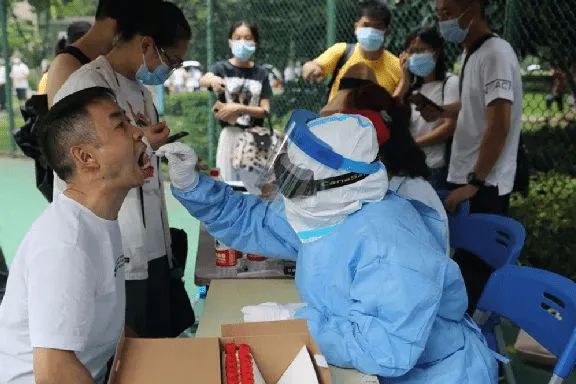
6、Continuously emphasize the importance: Ensure the smooth operation of emergency green channels in all medical institutions, guarantee the admission of "critical patients" such as those requiring blood transfusions, critical care, and maternity services. Unnecessary tragedies should be avoided at all costs, and this point cannot be overstated.
7、Adjust expectations for the economic growth rate in 2022 appropriately; extraordinary times call for realistic expectations. Wu Zunyou, Chief Epidemiologist at the Chinese Center for Disease Control and Prevention, pointed out, "We should acknowledge the characteristics of the Omicron strain, such as its hidden transmission and rapid spread. These features make it even more challenging for us to achieve 'dynamic zeroing,' and the time required for 'dynamic zeroing' will be longer."
Related information