

Milestones
An Audit Draft Triggers a Tragedy – Unsealing Diary (Part 1)
Date: 2022-03-21Views:
Written By Song Xiangqian (Alan Song) CEO of Harvest Capital

Epidemic Three Years, All Beings Suffer - Written on the First Day After Isolation Lifted
01
Reflections Under the Pandemic
Never before have I flown over such deserted Shanghai. The entire city, silent like an era without people in a sci-fi movie, seems to be sealed by the virus at the moment of the vernal equinox. Now, I miss the congested Shanghai of the past. Crowded streets and bustling shoulders are the true symbols of a prosperous city. The vibrancy of human life is indeed something to be cherished and celebrated. Liberated from the long 21 days of isolation, there's a profound yearning for freedom permeating every cell of my body, as the isolation time was long enough to contemplate life.
Time flies, and in the three years of battling the epidemic, all beings suffer. Shifting the lens of time to the current pandemic, we witness delivery drivers securing blankets on their food delivery motorcycles, taking warmth wherever they go. Many migrant workers, instead of rushing to buy rice and essentials, are dragging their suitcases back to the company to retrieve their computers and commence remote work. This wave of the epidemic has put Beijing's tutoring kids and Shenzhen's working class under the spotlight, and even Shanghai has witnessed conflicts among medical staff, including physical altercations between superiors and subordinates.
In the previous stage, our anti-epidemic efforts indeed achieved great success. However, as we desire the crown, we must bear its weight. Now, Shanghai and Shenzhen are effectively approaching lockdown. With a combined GDP of nearly 20 trillion yuan, accounting for over 20% of the national total, and contributing to nearly 30% of the import and export volume, these two cities are gearing up to lead the second half of the anti-epidemic battle. Our anti-epidemic efforts have truly entered a "Minsky" moment, with reefs and shallows strewn across the anti-epidemic channel, and societal fatigue becoming an unbearable burden.

Today, the Hong Kong government announced measures to partially resume normal life. Perhaps, after enduring ridicule, Hong Kong has truly emerged from the pandemic, presenting a model for others. It's worth carefully examining and summarizing the experiences. Hong Kong's reality of coexisting with the virus and adopting a more relaxed approach might be an alternative way for our motherland to make up for its anti-epidemic efforts.
As the virus evolves and mutates, our anti-epidemic policies indeed need to evolve and upgrade accordingly. Our anti-epidemic thinking must be based on science, refreshing and progressing from a position of humanistic values. Racing against time, we should strengthen nationwide booster shot vaccinations; advocate for the sequential use of inactivated vaccines along with recombinant protein, adenovirus vector vaccines, and mRNA vaccines; emphasize the introduction and use of mRNA vaccines and oral medications that are more effective against the Omicron variant; increase vaccination efforts for the elderly and eligible children; actively stockpile anti-epidemic supplies and medical resources; and truly implement scientifically tiered diagnosis and treatment, avoiding straining healthcare system resources, and doing thorough preparations for potential large-scale outbreaks in the future. This might be the correct option for a scientific approach to anti-epidemic measures.
Despite the visible achievements in anti-epidemic efforts, some places have developed an undesirable tendency in past public crises: instead of prioritizing societal public interests, scientific planning, and careful coordination, they adhere to a principle of accountability and top-down decision-making. The first thought is to wield power to the extreme, limit the rights of the masses to the extreme, and attempt to demonstrate resolute and forceful actions as a way to showcase administrative decisiveness, strong measures, and competence. "Compliance" becomes the best governance, and hasty and reckless "decisiveness" ironically turns into the biggest political correctness. This has been evident in the anti-epidemic efforts in certain western regions and major flooding incidents in central cities.

Next, coordinate epidemic prevention and control with economic and social development, take more scientific and effective measures, and strive to achieve maximum prevention and control effects at the minimum cost. This approach will help minimize the impact of the epidemic on economic and social development and truly serve the people. In reality, there have been instances of overly stringent epidemic prevention measures, which go against the principles of scientific and precise epidemic prevention and artificially amplify the adverse effects of the epidemic on social and economic development. This, to some extent, weakens the local population's recognition of the achievements in epidemic prevention. It contradicts the requirement to "achieve maximum prevention and control effects at the minimum cost." Excessive epidemic prevention measures should be resolutely eliminated under new epidemic conditions and the requirements of economic and social development.
How can we achieve "Pareto optimality" in the process of scientific epidemic prevention? How can we rely on "Nash equilibrium" in epidemic prevention decision-making to achieve dynamic scientific control? How can we implement precise epidemic prevention, similar to the "milk tea shop" model in a major eastern city, in a humanized way? Making the greatest effort to control the epidemic, safeguarding people's livelihoods, and minimizing interference and impact on people's lives and social well-being is a matter of governance wisdom. It tests the ability to govern and is crucial for the ultimate victory in epidemic prevention and the well-being of the people. It's time to adjust epidemic prevention and control measures. The shift is not easy, and it involves challenges, but difficulties polish the jade into perfection. As Socrates said, "Life is a mirror; if you frown at it, it frowns back. If you smile, it returns the greeting."
02
The Peril and Opportunity of Chinese Concept Stocks
As the challenging chess game of epidemic control reaches the mid-game, the financial market is also rumbling with the sound of spring thunder, sparked by what seems to be a "bloody incident" triggered by an audit dispute.
Chinese concept stocks, which are listed overseas but have their primary business and profits in mainland China, experienced a severe downturn. As of the end of 2021, there were a total of 380 Chinese concept stocks, with 281 listed on U.S. exchanges. From February of the previous year to now, 50 of these stocks have fallen by over 90%, 117 by over 80%, 163 by over 70%, and 216 by over 50%. Only 15 companies saw gains, resulting in a cumulative evaporation of market value exceeding $1.5 trillion, equivalent to nearly 10 trillion yuan. This is a massacre in the capital market, making people wonder if an era is coming to an end.
The newly enacted U.S. Foreign Company Accountability Act details that if a foreign-listed company fails to submit the reports required by the Public Company Accounting Oversight Board (PCAOB) for three consecutive years, the U.S. SEC has the right to delist it from the exchange. The first batch of five Chinese companies listed as "potential delistings" may be delisted as early as 2024.
Leveraging international capital markets is advantageous for both the state and the people. Improving the quality of accounting information and internal control compliance is a common goal for everyone. There are successful cases of regulatory cooperation in other countries that can be referred to. Copying the model is not difficult.
For some reason, PCAOB and the China Securities Regulatory Commission (CSRC) have been in a game of chess over cross-border audit supervision for more than a decade. Various negotiations, discussions, and memorandums of understanding have failed to resolve differences between the two sides. This self-consuming and self-destructive state of great power self-confidence essentially results from a lack of confidence, insufficient rule consciousness, and a victim mentality.

Looking back at the WTO negotiations, Mr. Long Yongtu transformed from having black hair to having white hair during the negotiations, which were on the verge of collapse. The talks were tense and reached a critical moment where Premier Zhu Rongji's pragmatic intervention finally sealed the deal. This marked the beginning of China's grand economic and social development after joining the WTO, propelling the country into a golden era in the first decade of the 21st century.
Maintaining strategic composure, stepping out of the historical cycle of the rise and fall of great powers, requires us to be objective, fair, and pragmatic. By not taking an oppositional stance to common sense, resolutely defending common sense and principles, we can prevent the recurrence of tragedies like the Chinese concept stock debacle.
During a downward economic cycle compounded by multiple factors, it is essential to cautiously employ policies affecting the market, take a break with the people, and compromise with the market, without compromising our path towards political correctness and social harmony. The rhythm is always the most crucial factor in the melody of the times; only by following the beat can we play the strongest tune of the era. The depth of contemplation often determines the ultimate achievement in life and career.
03
"Nash Equilibrium" in Great Power Games
There is never an upper limit to the relationship between two countries. A rising great power should possess the ability to judge the situation and not build under the shadow of a dangerous wall. The era is no longer one where, as Bismarck said, "truth lies within the range of a cannon." We cannot let our so-called "financial capabilities" blind us to our limited strength. In fact, this is not just a simple matter of choosing sides; it is already a major confrontation between Eastern and Western values. It requires us to stand on the side of common sense and justice and empathize with the times.
In reality, the United States has launched an "unrestricted warfare" without deploying a single soldier or weapon. It has encircled its opponent from various angles such as politics, military, intelligence, diplomacy, finance, public opinion, morality, technology, and international alliances, delivering ruthless blows. The outcome was decided the moment they struck.
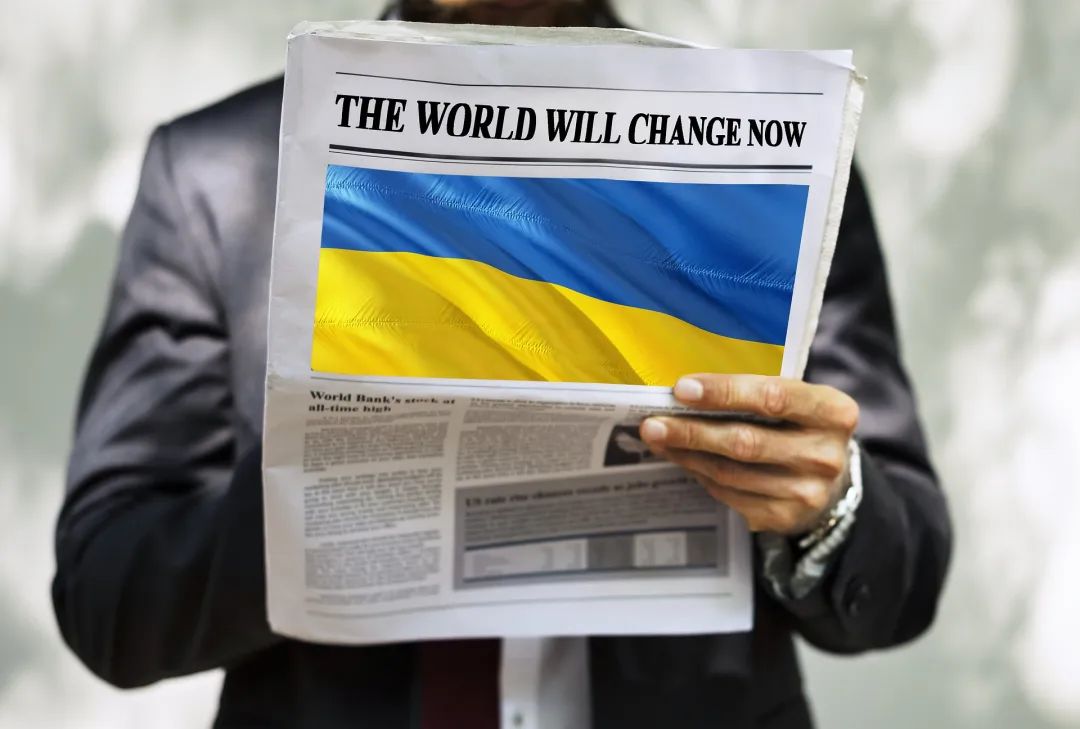
Descartes said, "The more complete the domination, the better, and the more ordinary the observation, the better." "Applying observation and experience harmoniously to life is wisdom." The grass snake's trail is long, and the pulse runs a thousand miles. Starting from geopolitics and ideology, viewed through the lens of a broader historical context using a grand historical perspective to overview this period of conflict and upheaval, future generations will be surprised to find that this is a thorough settlement of the old order after the Soviet Union's collapse and the fall of the Berlin Wall. It is also a systematic test and nucleic acid test on the potential major competitor looming in the future. Regardless of the outcome, this covert war, unsworn but already at the middle game, awaits a decisive move to change the balance.
We have always seen stories of brothers resisting insults from outside the wall, but we have never witnessed brothers fighting across the wall and engaging in a magical reality of open conflict. It happened with Russia and Ukraine, it happened with North and South Korea, and it happened in Syria. Why wouldn't it happen to us? In fact, this is a reflection and challenge to the order established by the nation-state under the Peace of Westphalia Treaty in human political civilization. The old order is in disorder, the new world order is far from being established, and the foundation of modern nations founding and establishing will inevitably move towards a new era of "democracy + nationality + values," forming a trinity of nationhood.

Just as Friedman described, from now on, the world is flat, and the end of history may eventually come. The vitality of culture and values will inevitably deconstruct and reshape our world. Forgiveness is a powerful expression, and love is the privilege of the brave. I love my country, but I love the truth even more. Choosing to stand on the side of common sense and conscience is the shared choice of everyone in this era.
In this way, the dream of a great nation's rejuvenation is attainable!
Related information