

Milestones
15 Years of Harvest Capital: How a "Counter-Human" Institution Was Forged
Date: 2022-03-02Views:
Written By 36kr Media

In May 2021, Harvest Capital achieved two consecutive IPOs within a week: Dongpeng Beverage and Amorepacific went public on the A-share market, with the former experiencing 14 consecutive daily limit increases and reaching a market value exceeding one trillion yuan. Even after a subsequent pullback, it remained a "three times bull stock." A few months earlier, the A-share market witnessed the "Baozi Legend" – Babai Food, a small business selling baozi (steamed buns) for 2 yuan each, went public, hitting eight consecutive daily limit increases, and its market value has tripled since the IPO.
Due to in-depth research, early investment, and heavy commitment, HarvestCapital became their unique and influential external shareholder. For instance, in the case of Dongpeng Beverage, Harvest, holding a 9% stake, had a paper gain of at least 6 billion yuan.
Harvest Capital recently drew attention in the venture capital circle in January this year when its 2018 investment, Laoxiang Chicken, completed a Pre-IPO round of financing with a valuation of 20 billion yuan and initiated the listing process. Today's also announced that it secured an exclusive investment of 600 million yuan from HarvestCapital, taking a step closer to an IPO.
For Harvest Capital, the concentrated outbreak of IPOs is just a phase, unable to accurately depict the full picture of this investment institution that has been single-mindedly and quietly cultivating the consumer sector for 15 years.
"The best way to export influence is through cultural output, and the best form of cultural output is 'lifestyle.' Consumer brands are one of the best expressions of 'lifestyle,'" explained Song Xiangqian, founding partner of Harvest Capital, regarding his investment logic. "In China, most consumer brands that can guide daily behavior habits are from Europe and America. European and American countries have promoted global cultural globalization through the globalization of consumer brands. Now, China's own fast-moving consumer goods and consumer brands are increasing and becoming stronger. Brands like Yili, Mengniu, Red Bull, Dongpeng, and Today are examples. With the globalization of China's influence, national brands as carriers of Chinese cultural globalization will undoubtedly be a sought-after investment for visionary institutions."
With more super deals appearing frequently in the public eye, people can catch a glimpse of Harvest's unique and sometimes "counter-human" traits: for example, it is extremely conservative in pulling the trigger, only making three or four moves a year out of over 200 companies it evaluates; it doesn't care about valuations but often secures the highest value-for-money prices; it claims to have never lost the principal in any project; it is more obsessed with post-investment empowerment than the pre-investment stage, keen on creating fascinating "growth curves" with entrepreneurs, and sometimes even directly getting involved.
As the head of Harvest Capital, Song Xiangqian, just past his forties, has a time management style that differs from most investors. He sleeps only four to five hours a day, and besides routine project evaluations and due diligence, he spends most of his time on the front line. "The probability of finding Song CEO at the production factory of the invested company is higher." A Harvestcolleague told 36Kr. Almost all aspects of a company's products, even the packaging, Song Xiangqian will personally participate in. "He can even draw out all the production processes himself."
01 Atypical "Investment Firm"
"Old Song, don't go anymore, it's hopeless." In the five years before Harvest invested in Dongpeng Beverage, Song Xiangqian heard this sentence more than once from other partners.
Song Xiangqian became acquainted with Dongpeng Beverage founder Lin Muqin in 2012, and he had been closely observing the functional beverage industry for more than ten years before that. He highly admired Dongpeng and believed it was the "most likely to become China's Red Bull" brand. However, at that time, Dongpeng's special drinks did not need financing, so Harvest could only watch.
Harvest's strong industrial background and industry penetration capability allowed Song Xiangqian to communicate with Lin Muqin, a 35-year-old "old hand" in the beverage industry from Chaoshan. However, for five years, he continuously visited Lin Muqin more than ten times. Although each time was only half an hour for a cup of tea, "we didn't even sit down for a meal," but the two sides gradually narrowed their relationship by chatting about the industry, products, and market – until June 2017 when Harvest had the opportunity to strategically invest 350 million yuan in Dongpeng Beverage, becoming its second-largest shareholder.
Rather than saying that Song Xiangqian's perseverance over the five years impressed Lin Muqin, it is more accurate to say that Dongpeng saw the "empowerment chain" behind Harvest – compared to pre-investment and mid-investment, Harvest pays more attention to providing post-investment value-added services. This makes it a "scarce resource" distinct from most investment institutions on the market.
Here is the English translation of the provided text:
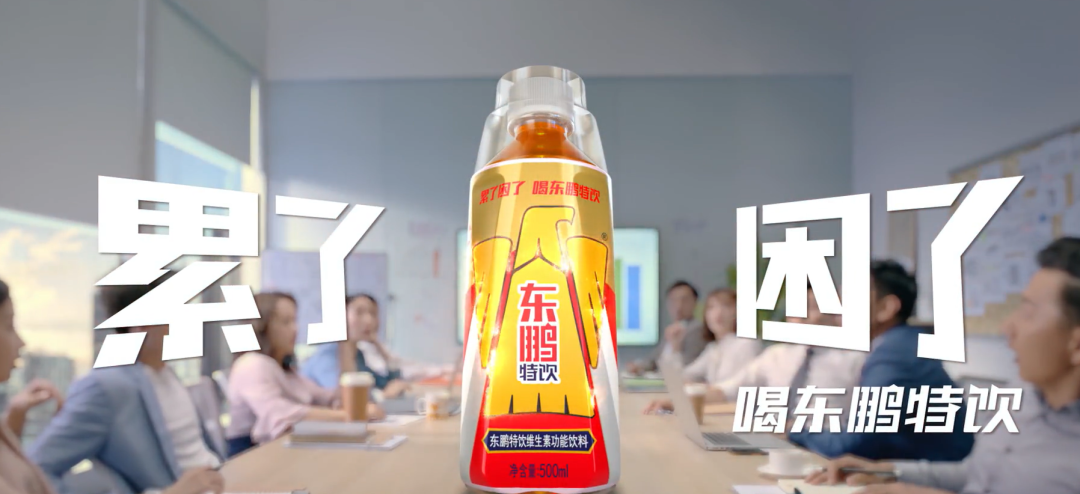
Harvest Capital, fundamentally, is an industry investment focused on altruistic empowerment. Providing funds is merely the entry ticket; they also proactively offer capabilities in strategy, operations, branding, and channels. As a noteworthy detail, in 2017, when Dongpeng Beverages planned to compete with Red Bull by adopting a price reduction strategy and simplifying packaging, Song Xiangqian immediately advised against the high probability of the price reduction strategy being wrong. "The sensitivity of most people to consumer goods generally involves two aspects: price reduction and quantity increase," he concluded after in-depth discussions with Lin Muqin, the founder. The optimal strategy, according to them, was to adopt a larger bottle without reducing the price, increasing the packaging from 350ml to 500ml. Subsequently, Dongpeng achieved a compound annual growth rate of 35%.
Consumers are aware that deepening and expanding channels are crucial. Large companies in consumer goods categories, such as Nongfu Spring, Coca-Cola, and IBM, have revenue and network layouts that directly correspond, with high network density affecting the company's ROE (Return on Equity). After the investment, Song Xiangqian repeatedly facilitated collaboration between Dongpeng and previously invested enterprises. For instance, he introduced Dongpeng's key executives to the executives of Zhai Zhai, after which Zhai Zhai opened its channels to Dongpeng. He also recommended Dongpeng to Lai Yifen, helping them enter the Shanghai market.
In addition, Harvest Capital helped Dongpeng break through the constraints of the era of large-screen advertising and transition to digital communication under mobile internet. Leveraging domestic and international sports event sponsorships, extensive placements in popular TV shows and variety shows, and in-depth cultivation of consumer groups, they successfully expanded beyond platforms like Douyin and Bilibili, using QR code digitization and comprehensive marketing. By the time of Harvest Capital's investment, Dongpeng had over 200,000 active terminal points. By the first half of 2021, this number had increased to 1.79 million. At that time, Dongpeng's revenue was only CNY 1.8 billion, and net profit was CNY 180 million. In 2021, Dongpeng Beverages' revenue reached CNY 6.978 billion, a year-on-year increase of 40.72%. Song Xiangqian predicts that by 2022, Dongpeng Beverages will join the "Billion Revenue Club."
In the unpredictable world of venture capital, Harvest Capital is undoubtedly a "quirky" presence. In 2007, when many investment firms were establishing their presence in China and making bold bets on the internet, later gaining fame through major shifts in the industry to capitalize on the dividends of the era, Song Xiangqian stubbornly chose the relatively quiet consumer sector. This decision might be closely tied to his extensive background.
As a veteran with over 20 years of experience in the investment industry, having worked in sell-side businesses in securities firms, managing assets, investments, and finance, Song Xiangqian's accumulated assets under management exceeded CNY 80 billion—someone with financial acumen who believes in cash flow and profits, placing special emphasis on the value creation of companies. For the past 15 years, Harvest has adhered to the principle of investing in industry leaders, benchmarking against global leaders. The ultimate pursuit of post-investment empowerment has been ingrained in Harvest's genes from day one.
Song Xiangqian believes that the Chinese VC/PE industry should provide value-added services. On one hand, this involves internal value chain exploration and reconstruction within enterprises; on the other hand, it involves empowering value realization from external aspects of the enterprise. Only in this way can large companies be effectively served. Today's achievements to some extent validate this challenging and circuitous path's effectiveness.
"Time is the scale for measuring the value of a company, and money is the by-product of doing things right," Song Xiangqian tells 36Kr. Harvest has never lost a penny on any project, and, instead, invested companies have consistently provided returns beyond expectations.
02 Variables and Growth Factors
Song Xiangqian possesses a straightforward and universally applicable expression system, sincere to the core. For instance, when describing invested companies to third parties, he habitually uses expressions like "we" and "clients." When defining himself, he says he is a "front-line worker" and "the champion's training partner." When asked about interacting with entrepreneurs, his response is, "If you are a good person, you will unite with good people. People are complicated, yet remarkably simple. Embrace an altruistic attitude, and others will crazily support you; the competition is about character and hearts."
In Song Xiangqian's core, there is always a sense of tenacity, a belief in investing for the greater good, and a belief that professionalism triumphs. This is also the biggest difference between Harvest and other institutions: treating oneself as a variable, a growth factor, integrating into the enterprise's development model, becoming their business partner and super employee. In an era where most people are seeking arbitrage opportunities, he hopes to create a market logic where hard work and professionalism lead to excellent results through this distinctive feature of Harvest.

Similar to Dongpeng Beverages, Harvest Capital also spent over five years on its investment in Babifood. Song Xiangqian still remembers the scene of his first meeting with Babifood's founder, Liu Huiping, in a small park in Shanghai. "He rushed over with a face full of rejection and confusion: Can the owner of a baozi shop, with only a junior high school education, take the company public?" Even when Harvest first approached Babifood, many investment institutions did not believe that a "small baozi (steamed bun) business" could go public.
However, Song Xiangqian discovered that Liu Huiping, despite being a small business owner, was young, energetic, and willing to embrace new ideas and paths. In the first year, he set up a stall on the streets of Shanghai and earned 20,000 yuan. In the second year, he moved to a storefront, started building a brand, earned 200,000 yuan in the third year, and later learned management methods from KFC and McDonald's to upgrade the company, continuing to expand the chain. As a result, "Master Liu's Baozi" became the first company among all husband-and-wife shops to achieve chain and product standardization. "Let go of direct management and strictly focus on franchising."
After Harvest's entry, Song Xiangqian provided a crucial strategic suggestion to Babifood. "At that time, Babifood already had a central factory supply chain and a standardized store system. Why not provide better money-making opportunities for husband-and-wife shops or similar competitive companies? Offer clean, hygienic, and ethical products to more ordinary people," Song Xiangqian told 36Kr. This approach had an immediate impact. Babifood not only completed the horizontal expansion of its products but also achieved vertical integration of the industry.
This became almost a case of industry restructuring. After Harvest's investment in 2015, Babifood expanded from over 400 traditional stores to 4,000, and revenue increased from 500 million to nearly 1.5 billion.
Laoxiangji (Old Village Chicken) was the fastest investment in Harvest's history. In April 2018, Harvest Capital invested nearly 200 million yuan, becoming Laoxiangji's only external investor at that time. Many years before, Harvest Capital had keenly anticipated that someone would upgrade the Chinese fast-food system; it was just a matter of who. After covering the entire industry, they found Laoxiangji. "I had lunch and a little wine with the founder, Shu Congxuan, and it was settled—4 billion valuations, with no negotiation. Looking at it now, that price was quite cheap." After that round of financing, Laoxiangji smoothly expanded nationwide.
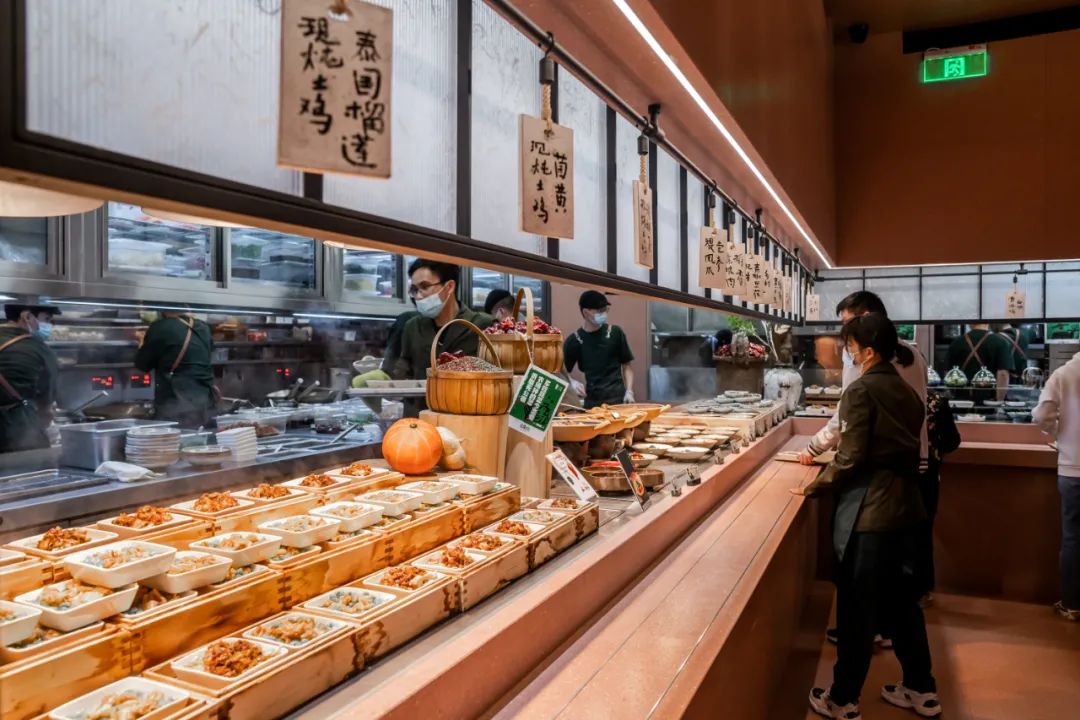
Over the past five years, Harvest Capital has provided comprehensive and crucial post-investment support to Laoxiangji. In addition to funding, Harvest has offered strategic advice in various areas such as daily operations, management, internal control enhancement, and strategic layout adjustments. Song Xiangqian openly acknowledges the "clashes" with the founder, but they are all related to issues of operational management, internal control, and business model upgrades. "Everyone mutually acknowledges and the underlying logic is consistent." Laoxiangji has publicly shared some data: it took the company 12 years to surpass 1 billion yuan and another 2 years to surpass 2 billion yuan. From 2011 to 2019, its profit increased 33 times, sales revenue increased 32 times, with an average annual growth rate of around 40%.
Wenheyoo has never lacked customer traffic since its establishment and has no financial burden, which gave the founder, Wen Bin, the confidence to reject offers from over a hundred institutional investors. However, at the end of 2019, Wenheyoo unprecedentedly accepted nearly 100 million yuan in exclusive investment from Harvest. The explanation given was that, compared to the investment, Wenheyoo values Song Xiangqian's management and financial planning capabilities more, which can effectively address Wenheyoo's existing "shortcomings." "Wen Bin's requirement for me after the investment is that I must 'go to work' at Wenheyoo on time, preferably coming to Changsha three times a month," Song Xiangqian said with a smile, adding that a well-known investor even teased him for "signing a contract of servitude."
In fact, if an investment institution cannot deeply understand the essence of business, its empowerment of the invested company can easily be misconstrued as "interference." Moreover, without refining a set of tools to empower the enterprise, the suggestions proposed often end up being counterproductive.
03 Investment Research Takes the Lead
In the rapidly changing landscape of the domestic primary and secondary markets, there are numerous approaches, with the mainstream dividing into two: those leaning towards deal-driven and those favoring research-driven. Harvest Capital belongs to the latter.
In the venture capital circle where trends quickly rotate, making predictions about specific segments is not difficult—only requiring sufficient diligence and willingness to incur certain costs. The real challenge lies in conducting a comprehensive and thorough search for players in the sector, making accurate predictions about their strengths. First, there must be a good company entering the field of vision, and second, in a field like consumer goods that is not primarily capital-driven, convincing founders to choose your investment is a skill in itself. There is also a more practical situation where many remarkable companies are hidden in the "black forest," posing a significant obstacle to VC's search efforts.
Typically, investment institutions rely on third parties or intermediaries to recommend projects. Harvest's style is to proactively discover and contact companies, followed by long-term and continuous monitoring. Harvest spent 10 years internally building a database of more than 5,000 companies in over 1,200 sub-industries within the consumer sector, selecting those with profits exceeding 50 million yuan—what is known as the head enterprises. It's about targeted and accurate strikes.
To some extent, the investment style represented by Harvest has evolved into the 3.0 stage, namely, empowering organizations. Song Xiangqian explains that this means truly helping companies become industry leaders and completing a revolutionary efficiency improvement based on industrial internet. Investment research taking the lead and establishing a cognitive map is a prerequisite.
Harvest's 11-step due diligence "standard actions" have gained widespread recognition for their rigor within the industry. "Before entering the field, we will directly create a due diligence data checklist. Then we conduct on-site due diligence, followed by daily work reports and weekly work summaries. We address the company's issues with specialized documents, along with the formation of due diligence reports. Once formed, there are profit forecasts, investment value reports, and management recommendations, as well as post-investment management for every company," Song Xiangqian explains.
He introduces that within Harvest, investment managers have to read a large number of research reports every day, summarize numerous industry cases, and conduct specialized research for the projects they manage. Due diligence reports before meetings generally include an industry due diligence report, a project's investment analysis report, a compilation and interpretation of laws and regulations for the entire industry, profit forecast reports, and benchmark analysis of similar competitors across the entire industry. The total page count can reach 400 to 500 pages. Under normal circumstances, after completing a project, the entire work document can amount to 5 gigabytes.
"Most institutions consider the work finished once the investment is completed, but for us, the work has just begun when the investment is completed," Song Xiangqian says. Over 30 invested companies have accumulated a vast 300 gigabytes of documents, and "we have to take care of all the needs of the invested companies, delve into all the details comprehensively, and maybe some post-investment services are not recognized by the other party. We persist in doing our best, not seeking the other party's acceptance and approval, but seeking inner peace." In Harvest and in Song's heart, the professional attributes of the investment industry are of high quality. Investment in doing good is not just a slogan, and ESG is not just a game to impress LPs and put diamonds on the crown. More importantly, it is filled with awe for the market, respect for professionalism, and love for knowledge. Only in this way can one be determined to observe broadly and take selectively, accumulate thickly and release thinly. The logic behind a management institution managing nearly 30 billion yuan with only thirty-odd shots in fifteen years is a tribute to the "anti-human nature" constraint and restraint. After all, few GPs in the market will choose to start with such a difficult and unrewarding high-difficulty move without a guaranteed return. Perhaps this is the greatest ability and mystery of Harvest Capital.
"Life is your year-round effort beyond the ordinary, often not getting recognition, or even being forgotten, but you still want to move forward with abandon." This is Song Xiangqian's favorite saying. "Harvest Capital is committed to creating the world's largest brand map and a beautiful lifestyle for all Chinese people, supporting national brands, helping Chinese consumption, entering the world of mortals, and empowering people's lives. This is truly loving the country and the people."
Related information