

Milestones
The first half has come to an end, and the second half is about to begin | Insights from Harvest
Date: 2022-01-20Views:
This article is sourced from Zhigang Think Tank (ID: wzggzswx), written by Wang Zhigang.
The year 2021 has just passed, and it was a memorable, reflective, and enlightening year.
In my year-end summary titled "Revelations of the Gengzi Era" in 2020, I expressed concerns by stating, "The future economic situation will be an era of endurance, and only those who endure until the end will be qualified to talk about tomorrow."
At that time, some thought I was exaggerating, but looking at various economic indicators from the first three quarters and the significant economic events such as Didi's delisting, hefty fines for Alibaba and Meituan, the overnight collapse of the trillion-dollar education and training industry, and the comprehensive downturn in the real estate industry—all of these events seem to have unfortunately confirmed my predictions.
Now, as we bid farewell to 2021 and usher in the new year, it's time for reflection and anticipation. How have private enterprises, especially in the manufacturing sector, fared? Are there any new opportunities emerging?
To understand the most authentic state of the Chinese economy, I conducted in-depth visits to over a dozen typical small and medium-sized manufacturing enterprises in the Greater Bay Area in the last month of 2021. I traveled extensively on both sides of the Pearl River, closely examining the survival status of these small and medium-sized enterprises.
These enterprises vary in size and nature, encompassing both traditional manufacturing and high-tech industries. During the interviews, the privately-owned entrepreneurs, who have endured many years of hardships, often asked me with a glimmer of hope, "Will the situation improve next year?" However, my response may have been disappointing: "It's not just you who is going through tough times; everyone is. It's not only this year that is difficult; next year may be even tougher, and the following year may not be much better."
Why do I say this? Because the next few years will mark the beginning of a major upheaval unprecedented in decades.
The first half of China's development has already concluded, and the second half has not yet begun. Many of the familiar old rules no longer apply, but the new playbook has not been fully established, leaving you feeling lost and confused, which is entirely normal.

1. Observing one falling leaf reveals the arrival of autumn.
During my exchanges with entrepreneurs in the Pearl River Delta, almost all business leaders mentioned the same thing: this year has been the most challenging.
The challenges are multifaceted:
- Difficulty in rising labor costs and labor recruitment.
- Significant increases in raw material and energy costs.
- Impact from changes in the global trade situation, including higher tariffs and weak exports.
- Persistently high financing costs, with financial institutions often reluctant to lend, creating a vicious cycle for business operations.
Observing one falling leaf can signify the arrival of autumn. When even the most developed, market-oriented, and export-oriented small and medium-sized enterprises in Guangdong are facing these "four difficulties," it indicates a severe test for the entire Chinese market economy.
2. The Essence of Contradictions—Imbalances in Five Major Relationships
I believe that the current challenges faced by business development can be attributed to various factors, ultimately pointing to one fact: China is at a crucial stage of transitioning from the first half to the second half of development, and many crucial relationships have not been sorted out.
I have singled out the most significant five contradictions, which I tentatively call the "Theory of Five Major Relationships."
The first is the relationship between international and domestic factors.
Current China is in a unique period of simultaneous significant changes in both domestic and international environments.
The strategic containment of China by the United States continues, and tensions in the Taiwan Strait are escalating. The Biden administration, compared to the Trump administration, is more adept at manipulating ideological weapons. While Trump played with guns and sticks, Biden engages in a united front strategy to encircle China.
This year, Meng Wanzhou returned to China, the United States made new statements on trade issues with China, and the leaders of China and the United States restarted dialogue. The Biden administration began showing some goodwill to sit back at the negotiation table.
However, I believe that the relationship between China and the United States cannot achieve substantial improvement in the short term because the contradictions between the two countries stem from two unavoidable traps.
One is the "Thucydides Trap." Thucydides, an ancient Greek historian, concluded from the Peloponnesian War that a rising power is bound to challenge an existing power, and the existing power will inevitably respond to this threat, making war inevitable. The Thucydides Trap is almost considered a law in international relations.
The United States, as the long-standing hegemon, has dealt with numerous "old seconds," from Britain around World War I, Germany during World War II, the European Union post-war, Japan in the 1990s, to the disintegration of the Soviet Union. All have experienced strategic containment by the United States.
Among the challengers to the United States, China is the most unique. While the former Soviet Union had different political systems, it still belonged to the broad category of Western Christian civilization. Although Japan had cultural peculiarities, it comprehensively studied and adopted Western practices economically and institutionally. China is fundamentally different in terms of culture, economy, and system.
China's rapid rise demonstrates that the "end of history" has not yet arrived, and capitalism is not the highest stage of human development. Faced with a completely different competitor, the United States' attitude is complex and hard to accept.
Today's United States is, in fact, being held hostage by so-called political correctness and overwhelming public opinion. Having been the world leader for decades after the war, the strength of the United States has led to its arrogance. It is nearly impossible to change this collective sentiment in the short term.
The second inevitable trap is the "middle-income trap." Many countries in history, such as Mexico, Brazil, and Argentina in Latin America, as well as the Philippines in Southeast Asia, have failed to transition from middle-income to developed countries.
China is facing this danger today. With a population of 1.4 billion, there are still many people awaiting development and prosperity. To break out of the "middle-income trap," it is necessary to achieve breakthroughs in high technology. In the future great-power competition, technology will be crucial, and a country's comprehensive strength in technology will largely determine its position in the international power structure.
Previously, China could imitate and catch up, producing some low-end products. Now, to continue moving forward, it must lead and break through in technology. The process of upgrading from labor-intensive low-end manufacturing to technology-intensive high-end manufacturing is essential for a sustainable future.
The core of the U.S. pressure on China is also the containment of high technology. If China does not engage in high technology, it will inevitably fall into the "middle-income trap." To avoid this trap, China must invest in high technology. Therefore, whether it's the U.S. or China, it is a contradiction that cannot be reconciled in the short term, and we must clearly understand this.
Some people believe that the deterioration of Sino-U.S. relations in recent years is due to China being too high-profile on the world stage. Such views undoubtedly insult the intelligence and determination of the American people.
In the visible future, China and the United States will certainly continue to collide and develop through long-term cooperation and competition. This process will last for at least a decade. The struggle is ongoing, and difficult times are certain.
The second major relationship is between state-owned enterprises (SOEs) and private enterprises.
Whether acknowledged or not, we are entering an era of large state-owned enterprises. "Making state-owned enterprises bigger, stronger, and better" has become the mainstream ideology of the times.
Firstly, it needs to be clarified that the strengthening of state-owned enterprises is somewhat historically inevitable. On the one hand, compared to private enterprises, state-owned enterprises have stronger risk resistance and are more controllable. The missions and values undertaken by central state-owned enterprises are not merely economic functions; they represent a massive force that the country can deploy quickly and without cost considerations.
On the other hand, international competition today is essentially a competition in technological capabilities, requiring continuous technological innovation. However, innovation involves significant investment in research and development, and it is highly uncertain with low returns on investment. Relying solely on the market makes it challenging to promote innovation.
However, because state-owned enterprises are not simply based on economic calculations, they can play an important role in technological imitation, diffusion, and surpassing in the field of technology. Engaging in more basic research is essential for the medium- to long-term industrial upgrading and breaking free from U.S. "strangulation."
In summary, when a country faces internal and external challenges, it must overcome difficulties by integrating national strength and enhancing internal cohesion, or it won't be strong.
From ancient times to the present, whether it's China's Shang Yang reform or the Soviet Union's "war communism," the principles and essence are the same. Today, for China to achieve national rejuvenation and break free from Western strategic encirclement, state-owned enterprises, as major tools of a great power, are commendable.
At first glance, everything seems to be proceeding according to plan. However, ideals are lofty, and reality is stark.
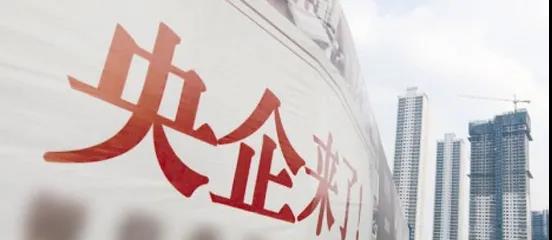
During my research in the Pearl River Delta region, some leaders of small and medium-sized enterprises told me that in recent years, under the guidance of the ideology of "strengthening state-owned enterprises," some centrally owned enterprises expanding their business in Guangdong have grown rapidly.
Originally, this was a good thing that stimulated market vitality. Still, some central enterprises not only brought their business but also a series of non-market-oriented practices such as bureaucratic style and the will of top officials. They behaved arrogantly, didn't play by the rules, and seriously delayed the flow of funds upstream and downstream. Coupled with frequent leadership changes in state-owned enterprises, the situation of "new leaders ignoring old policies" often occurs, making it difficult for many small and medium-sized enterprise partners to cope.
A few days ago, a typical case came to light. A giant central enterprise actually owed a small restaurant over 20,000 meals for an extended period. While the amount of money was not significant, it was essential working capital for a small business. The restaurant owner had no choice but to seek help from the media. However, in this situation, the other party still arrogantly exclaimed, "What does the media matter?" This arrogance is evident.
After the matter became significant, they eventually pushed a subcontractor to take the blame. However, if even a small subcontractor is treated this way, it indicates the domineering behavior of some central enterprises. The strong public response also indicates that this is just the tip of the iceberg.
Moreover, although policies treat all market entities, including state-owned and private enterprises, equally, I found in the research that in the practical process of many industries, there are various "invisible thresholds" for private enterprises from financing to project acquisition.
Recently, a major private entrepreneur who does substantial engineering supervision business consulted me about whether to accept the acquisition by a state-owned enterprise. I asked him why he was considering this, and he said that many major projects now explicitly require only state-owned enterprises to participate in bidding, excluding private enterprises from the game. Although the central enterprise planning to acquire him lacks ability and talent and relies on qualifications and platforms, they want to survive and must "join forces with a gun."
This phenomenon makes me highly vigilant. After decades of reform and opening up, many predecessors have faced numerous challenges to finally remove the red hat, just to participate more fairly and efficiently in market competition. Now, it quietly returned.
The plight of this engineering supervision company is not just an isolated phenomenon.
During my nationwide investigations, I found that in many fields where market competition should be fully utilized, project owners often show favoritism towards state-owned enterprises to emphasize "political correctness." This has even formed a widespread unwritten rule, promoting the arrogant behavior of state-owned enterprises dominating the market.
As a result, market fairness is disrupted, and the intrinsic driving force of innovation and economic development is weakened, posing a severe problem.
Even though it is now the era of "big state-owned enterprises," how to clearly define the boundaries between state-owned and private enterprises? How to fully leverage the decisive role of the market in resource allocation? How to make the advantages of both sides complementary? These are all questions worth pondering.
The third relationship is between the government and the market.
From Adam Smith's "invisible hand" to the dominance of Keynesianism worldwide, the government and the market have always been the two eternal elements of a market economy.
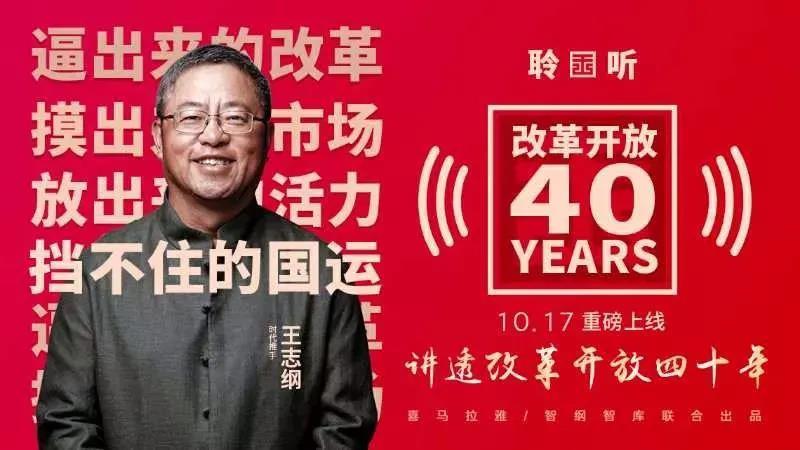
A few years ago, during the 40th anniversary of reform and opening up, I wrote an article summarizing the achievements and experiences of reform and opening up. It can be highly generalized into four sentences: Reform forced out, the market felt out, vitality released, and unstoppable national destiny. These four sentences have widely circulated.
History has shown that in a market economy, if the market lacks the tangible regulation of the government's hand, it will tend toward disorder and periodic crises. However, if the government acts as both referee and player, or even acts arbitrarily and irresponsibly, it will lead to inefficiency and severe waste. Therefore, for local governments, the key is to know when to act and when not to.
It should be said that in the past decade or so, some local governments have been "spoiled" by high-speed development. Taking advantage of the large investment-driven cycle and quickly cashing in through the rapid realization of land finances, they have aggressively engaged in infrastructure and accelerated debt expansion. This closed loop can be maintained during the high-speed economic growth stage, but once it encounters economic slowdown or even a downturn, it won't work. Even though the central government has repeatedly issued orders to tighten belts and live frugally, many local governments have not changed their mindset.
These problems began to surface a few years ago. News about counties with debts in the hundreds of billions and fiscal collapse has been common. Now, with the impact of multiple factors such as the pandemic, long-term quantitative changes have led to qualitative changes, and the financial crisis of local governments has begun to erupt.
People accustomed to being extravagant can always come up with many bizarre methods once they run out of money. Some time ago, Bazhou, Hebei, issued an unauthorized non-tax revenue assessment method, intending to solve the financial crisis through the collection of fees in a sporting way.
A lawyer friend of mine also told me about a bizarre incident. A client of his was involved in a case, and a county in the central and western regions pursued him across provinces, causing a significant drop in stock prices. However, the local government subsequently sent a standing committee member to negotiate. The implicit meaning was that as long as a certain amount of fines were paid to help the local finances through a difficult time, lenient punishment or even exemption could be granted.
I originally thought that such phenomena only occurred in certain areas in the central and western regions until I recently discovered during my investigation in the Greater Bay Area that the situation is even more severe than expected.
A leader from a strong economic town told me that their finances are facing a huge crisis, almost to the point of being unable to pay salaries. The reason is that the local government sold a large piece of land to a real estate company for the development of a characteristic town. The land acquisition alone took up a considerable amount of fiscal funds, and as a result, the project struggled to materialize, and the government's money vanished. This kind of government over-intervention in the market is prevalent nationwide.
I mentioned the importance of knowing when not to act, but in some areas, the government not only needs to act but also needs to act decisively. During my research in the Pearl River Delta, I saw a very encouraging phenomenon: after a long and arduous incubation process, the new energy industry has finally borne fruit.
The new energy industry requires high investment and has a long return cycle, and it cannot do without government support in the early stages. In the early years, many pioneers emerged in the market, but they all fell before dawn. Unexpectedly, in the past two years, the accumulation of quantitative changes has finally achieved a qualitative breakthrough. Industries such as wind power and solar energy can now achieve profitability without relying on government subsidies.
For our predecessors, we hold them in high regard, but the key to the rise of the new energy industry still lies in the strategic importance given by the country, focusing on long-term goals and persistent efforts. In the short term, although there may be some irregularities, even some instances of subsidy fraud, in the long run, these actions lay a solid foundation for the upgrade of the industry.
Currently, China leads the world in areas such as ultra-high voltage, photovoltaics, and electric vehicles. The technical manuals and industry standards for ultra-high voltage are translated from Chinese to English. For example, photovoltaic technology has now fully embraced marketization. In 2020, 15 of the top 20 photovoltaic companies globally were Chinese.
China also leads the world in the field of new energy batteries, with companies like CATL, Contemporary Amperex Technology Co. Ltd., NIO, XPeng, and Li Auto standing out. CATL's battery market share of 29.9% secures its position as the global leader, and China's production scale and ownership of new energy vehicles are also the largest in the world.
It is these series of achievements that have given China the confidence to propose the commitment to carbon neutrality, which serves as a typical example of government action.
However, it is regrettable that not all local governments can effectively manage their relationship with the market. Decades of development in China vividly illustrate that the market is the decisive force in resource allocation. The market acts like a sieve, determining one's fate - whether one is the grain, the chaff, or the gravel. No one can control it, and everything depends on the dynamic selection of the market. Where the chaff goes, where the grain goes, the final outcome will become clear.
As seen, many enterprises that self-proclaimed as giants ultimately suffer losses and humiliation if they cannot withstand the scrutiny of the market. On the other hand, those who dominate the market have been sifted out.
Huawei, once relatively unknown, has now become a prominent Chinese company, standing at the forefront of China-US confrontation. In contrast, the other three companies once hailed as "giants of China" received significant support but are now nowhere to be seen. ZTE, with some remaining strength, barely survived by signing agreements under pressure. Therefore, once we lose the powerful sieve of the market, the consequences are unimaginable.
The fourth relationship is between the older and younger generations.
Inheritance is an eternal topic in human society, but for contemporary China, it is particularly significant. The forty years of reform and opening up have brought about tremendous changes, creating a stable class of property owners who have not only changed their own destinies but also contributed to the continued prosperity of society. This is unprecedented in Chinese history.
As time passes, this generation is finally reaching the stage of bidding farewell to the historical stage. In the next 5-10 years, over 3 million private enterprises nationwide will face the crucial period of wealth and power transition between two generations. Over the past year, from the father-son battle of Shuanghui to the confession of Yin Mingshan of Lifan, these dramatic events have warned Chinese private enterprises that enterprise succession is a matter of life and death.
Today, during my visits to many private enterprises, I have found that many second-generation members have come to the forefront. In my conversations with these young people, I have noticed significant differences in their thoughts compared to their parents.
For those second-generation children who are unwilling to take over the family business, the inheritance method I personally favor the most is philanthropy. I know several successful and low-profile children of entrepreneurs who are dedicated to philanthropy, as their interests lie in public welfare. This positive force is also worthy of encouragement and guidance.
The experiences of history, both domestic and foreign, constantly remind us that wealth distribution and transfer through methods such as deprivation and equalization are disastrous and greatly undermine productivity. Only through orderly inheritance can wealth become a responsibility and power, supporting the continued prosperity of families, businesses, and society at large.
The fifth relationship concerns fairness and efficiency.
If the four major relationships—international and domestic, state-owned and private enterprises, government and market, older and younger generations—are summaries of social phenomena, then the changing relationship between fairness and efficiency is the essence of the era's transition.
At the end of this year, the Get platform asked me to provide an annual keyword, and I chose "second half." The great achievements of the first half of over 40 years ultimately stem from the desire of each individual to change their destiny being fully stimulated. Through market competition mechanism, efficiency takes precedence, maximizing human creativity.
However, under the call of "development is the top priority," it inevitably led to the era's characteristic of "everything goes as long as it contributes to development." Some "able" and "strong" individuals got rich first, and some "bad" people also got rich first.
Many wealthy individuals are morally questionable. Some see that taking the wrong path can lead to substantial profits and follow suit. Some criticize the "unwritten rules" while profiting from them. Especially in the capital market, it is a concentrated manifestation of human evil. The disruptive capital not only undermines social norms but also erodes the foundation of China's real economy.
However, in the second half of economic development, especially with the proposal of common prosperity, the position of fairness will be more prominent. It will be difficult to get rich again through "wild growth." The old ways of pursuing "flipping" and leveraging will no longer work. The methods of storytelling, concept creation, and IPO scams are also coming to an end. The era of following Nasdaq and Wall Street rules, pushing for IPOs through capital, and then cashing out, leaving behind chaos, has officially come to an end.
The most evident manifestation of the transformation of the relationship between fairness and efficiency is the end of the real estate myth. In September 2021, Evergrande suddenly collapsed, leading the entire real estate industry to turn downward. Once the pillar industry of the national economy, it now faces difficulties and uncertainties. Even now, some still cling to the illusion that regulation is temporary and can be endured.
But in reality, change never happens suddenly. Yesterday is the prelude to tomorrow. Over the past twenty years, the real estate
Certainly, we are not saying that these giants are not good. Outstanding private enterprises like Midea have commendable performances in the market. However, due to their dominant positions, they employ monopolistic measures, squeezing the development space for those upstream and downstream. This aligns with the logic of capital development. Similar oppression of small and medium-sized enterprises is not uncommon in various industries. Some state-owned enterprises, real estate giants, and even high-tech companies like Huawei have been rumored to engage in similar practices.
We must recognize that the evils brought about by such monopolies are indifferent to whether they are state-owned or private enterprises, in traditional or new economic sectors. This is a natural consequence of the concentration and aggregation of capital. Therefore, the current emphasis on anti-monopoly measures by the central government is timely and holds significant importance. It is likely to be further strengthened and even normalized in the future, a stance that I strongly support.
On one hand, there is a rebalancing act between fairness and efficiency. On the other hand, there is an overcorrection in some areas. If this trend is not reversed in a timely manner, it will have very negative consequences.
In the past year, some private entrepreneurs around me have reported instances where local governments, in response to the so-called "calls for three rounds of central distribution," allocated donation quotas to businesses. Not contributing to the donations made business operations extremely difficult, distorting the principle of voluntariness. Additionally, there has been a surge in online discussions advocating for attacks against entrepreneurs and affluent individuals, causing many business owners to worry, feeling that the money they have earned through a lifetime of hard work is no longer secure.
Recently, the public criticism directed at Lenovo, led by figures like Sima Nan, is a very typical example. Regardless of the right or wrong in the situation, the fact that a small video can generate such a huge response indicates that public sentiment and the development of the times have reached a special point. This necessitates correct guidance.
I have always believed that as China enters the second half of its development, the relationship between fairness and efficiency must be handled carefully. If we go against the tide and pursue superficial fairness, even at the cost of unreasonable efficiency sacrifices, pursuing fairness for its own sake, history has already shown us the consequences.
In summary, the temporary imbalance in these five major relationships is the root cause of the challenges we are facing. China at present is like a car moving at high speed, transitioning between the old and the new, requiring a re-engagement of the clutch and gear shift. This process takes time and requires adjustment.
After a year of observation, we all know that the first half has ended, and the second half is about to begin. However, how to start it not only tests the survival principles of each business but also the wisdom of the ruling authorities.
03
"Three Constants" Amid Challenges
Beyond the variables, it's crucial to recognize constants, referred to as constants, and I summarize them as the "three constants." Perhaps the turning point for the future lies within these "three constants."
The first constant is the long-term persistence of the primary contradiction in Chinese society.
The 19th National Congress pointed out that the principal contradiction in Chinese society has transformed into the contradiction between the people's growing desire for a better life and the imbalanced and insufficient development.
This statement can be considered a guiding principle, a profound and fundamental judgment on the developmental stage of China for at least the next 20 years. As long as this primary contradiction persists, the direction of China's future progress remains clear. Many people's concerns today about the possible shift and redirection of development ultimately stem from overlooking this point.
It's with this fundamental judgment on the primary contradiction that the country has formulated the goal of achieving high-quality development. High-quality development signifies the end of the era of extensive, low-quality high growth, marking a transformation from an economy-driven approach to one focused on quality.
In this context, new consumer demands, technological advancements, and emerging growth patterns will reshape the entire landscape. This presents limitless development opportunities for both businesses and local governments.
The second constant is the unchanging decisive power of the market.
After the Southern Tour in 1992, the 14th National Congress formally proposed establishing a socialist market economy to make the market play a fundamental role in resource allocation. Over the following two decades, the tide of the market economy surged, and China's economy achieved a remarkable growth miracle that captured global attention.
In 2013, the Third Plenary Session of the 18th Central Committee officially changed the wording to "ensuring that the market plays the decisive role in resource allocation." Behind this three-word change is a full affirmation of the role of the market economy over the past two decades and a summary of the development experience.
Stating that the market plays the decisive role in resource allocation implies that in the future, the ultimate standard for all reform and development orientations in China is the market, not the will of officials or immediate interests. At least at present, we have not deviated from this standard.
I have always believed that only when the political sphere, business sector, and the public all recognize that the market is the decisive force in resource allocation, guided by the market, and anchored by demand, can we fully activate the vitality of the market and overcome the current challenges.
The third constant is the unchanging nature of human beings.
One of the reasons for the great development of productive forces in historically developed countries was the liberation of human nature. Completely breaking the personal dependency relationships under feudalism and freeing the labor force from feudal manors shattered the existing production relationships. The profit-driven nature of capital and human nature spontaneously propelled progress in productive forces. This transformed the force of "I have to do it" into "I want to do it."
The sweeping and magnificent history of the reform and opening-up since 1978 is not only a history of the grandiose years by the river but also a testament to the power of human nature. Whether in enterprise management or national governance, unleashing the driving force of human nature has been indispensable.
Of course, human nature has both good and evil aspects. The promotion of good and suppression of evil require societal guidance and individual elevation, as articulated by Guan Zhong over two thousand years ago: "With sufficient clothing and food, one knows honor and disgrace, and with a full granary, one knows ritual and music." This is the meaning. We must not reverse this, setting up a standard of sainthood and demanding everyone to become a saint. This approach would only produce a large number of opportunists, two-faced individuals, and pseudo-gentlemen.
It's important to note that, between extreme goodness and extreme evil, there is a vast middle ground. Between saints and villains, the majority are ordinary people. While we can encourage ordinary people to do good, we must also respect this reality, acknowledge the imperfection of ordinary people, and unleash their creativity to make society dynamic.
I have always believed that, regardless of the changes in the world, human nature is eternal. Many truths are profound and splendid, but no matter how many are stated, they all return to human nature. As Friedrich Hayek warned in "The Road to Serfdom": The seemingly beautiful roads to heaven often lead people to the gates of hell in the end. The history of the past has fully demonstrated this.
On the contrary, if everyone in society can respect human nature, common sense, and laws, then all factors conducive to development will flow abundantly, and it would be impossible for the entire society not to progress.
4
Swift winds reveal the sturdy grass.
After discussing the five major relationships and the three constants, what I want to emphasize is that in challenging times, we must rely on the strength of grassroots, unleashing the vitality and creativity of the people.
China's past glory was laid at the beginning of the reform and opening-up when the spark could ignite a prairie fire. Whether they are small grass or towering trees, they have all grown in this fertile soil, supporting China's prosperity today. And those carrying China's future hopes are inevitably among them.
The key to the success of enterprises mostly lies in these seemingly inconspicuous small and medium-sized enterprises.
In general, the inspection of private small and medium-sized enterprises in the Greater Bay Area has brought me profound inspiration. It allows me to see a new pattern emerging amidst a desolate environment.
Over the past forty years, China's grassroots economy has evolved from nothing to something, from weakness to strength, forming a spectacular ecosystem. Among them, there are towering trees like Huawei, CATL, and Alibaba, thriving saplings like DJI and Hikvision, as well as numerous small grasses like Zhongnan Machinery and Han Yu Group.
While towering trees are admirable, we also simultaneously respect those quietly toiling small grasses. These grassroots enterprises, regardless of the ups and downs of the times, have been diligently cultivating in their respective fields, making remarkable innovations.
The power of these grassroots entities may not be conspicuous during times of prosperity and good fortune. However, once the tide recedes, and the truth emerges, a cumulative force will burst forth. A scene resembling a myriad of plants competing freely under the frosty sky is gradually unfolding.
The Era Calls for Grassroots Power
What we need to do is to rekindle our reverence for the market. It's crucial to understand that what China has always lacked is not talent but rather a conducive environment and ecology. As long as we broaden our perspectives, provide space, and instill more trust, the ingenuity of the Chinese people is boundless.
Our task is to further encourage the spirit of grassroots resilience and the determination to face challenges head-on. Behind this grassroots spirit lies the aspirations of entrepreneurs striving to change their destinies and the patriotism of building a harmonious and prosperous nation. From Cao Dewang of Fuyao Glass to Ren Zhengfei of Huawei, the entrepreneurial spirit fostered by the grand practice of reform and opening-up has profoundly demonstrated this point.
Amidst the surging tides, true heroes emerge. I firmly believe that millions of grassroots enterprises have underpinned the prosperity of the entire Chinese market.
In the turbulent times of the past, some individuals grew into towering trees, while others became legends. As China's economy fully enters the second half, a new era calls for the grassroots spirit, and we eagerly anticipate more grassroots enterprises to overcome challenges.
To echo an old saying, the years ahead will be a time of endurance, but after a year of hardship, we have proven that China remains the greatest certainty in the highly uncertain global economy.
Related information