Reported by PEdaily, Investment Community | Zhou Jiali
A major new funding round has emerged in China's booming consumer sector.
Investment Community has learned that Hunan Super Wenheyou Crayfish Co., Ltd. ("Super Wenheyou") has secured its Series B financing. The investor consortium is notably robust, featuring Sequoia Capital China, IDG Capital, Warburg Pincus, Country Garden Venture Capital, GIC, and CEC Capital.
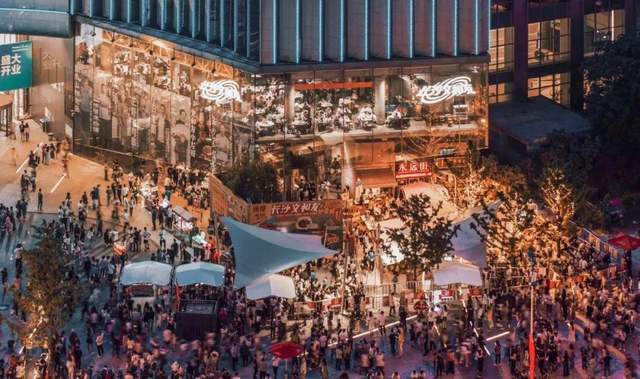
Super Wenheyou has long been synonymous with Changsha's vibrant urban culture. The first "Super Wenheyou" flagship opened at Changsha Hisense Plaza in 2018 and instantly became a sensation, drawing endless queues of customers. The masterminds behind this super-IP are a group of post-80s founders who channeled their deep passion for Changsha's heritage into the venture, transforming a humble street food stall into today's cultural landmark.
In recent years, Super Wenheyou has expanded beyond its home city, successfully launching locations in Guangzhou and Shenzhen. The Shenzhen outpost, which opened in April this year, saw waitlist numbers skyrocket past 50,000 on its inaugural day—a testament to its explosive popularity. Reflecting on this unique venture's rise, CEO Feng Bin once noted, "We aim to create distinct 'City Super Wenheyou' experiences, each rooted in local culture. It's a highly unconventional, non-standardized path—a complex challenge we've deliberately set for ourselves."
The Deal: How a Coveted Investment Came Together
The path to this investment began one night in November 2020. Sequoia Capital China Partner Su Kai met with founders Wen Bin and Feng Bin late into the evening. "We sat by a small river next to the Shenzhen Super Wenheyou construction site around midnight, talking freely about the business model and future vision. The discussion was incredibly energizing," a source familiar with the meeting recalled. That shared excitement paved the way for collaboration.
Su Kai observes that every era produces commercial spaces that capture its consumption spirit. "Super Wenheyou has tapped into the pulse of the younger generation," he said. "It started with iconic local street food, and upon that success, built out an immersive, multi-format experience. It has become a definitive model for a new generation of urban commercial spaces, with immense potential for growth and creativity."
He elaborated, "Commercial spaces crystallize the lifestyle themes of their time. We've seen the evolution from neighborhood grocery stores, to department stores focused on apparel and cosmetics, to shopping malls incorporating dining and entertainment. Today's youth are drawn to spaces that blend entertainment, retail, social interaction, and cultural atmosphere. Super Wenheyou uses beloved regional cuisine as its anchor, recreating nostalgic street scenes indoors to craft an environment where guests feel comfortable, linger longer, and naturally become brand advocates. There's ongoing potential for content innovation and category expansion."
IDG Capital was an early recognizer of Super Wenheyou's value and among the first institutional investors to engage deeply with the founding team. It provided comprehensive support, from macro-level strategy to hands-on execution in building digital systems. Although founder Wen Bin was initially hesitant about a Series B round, talks formally began in February 2020. By that August, he was convinced. Following extensive due diligence, IDG Capital led the round by signing the first Term Sheet in October 2020.
"From the start, we saw the innovative logic in Super Wenheyou's model and deeply respected the team's creative DNA," said an IDG Capital representative. "It combines dining, entertainment, and culture to create unique urban landmarks. Each new city launch is like opening a cultural 'blind box'—offering an experiential, consumable way to understand the city's history and community memory, true to its name, 'Wen Bin and His Friends.'"
The firm also highlighted Super Wenheyou's keen grasp of Gen-Z consumers. "It excels at meeting their emotional, experiential, and social needs, using immersive offline environments to connect powerfully with young users—a key factor in our investment thesis."
Warburg Pincus, another participant, emphasized the cultural innovation. Partner and Head of China Consumer Investment Zhang Lei stated, "Super Wenheyou has pioneered a new Chinese model of 'cultural creation + F&B.' By authentically recreating the deep cultural layers of a city and blending them with contemporary elements, it compresses local heritage and gourmet food into vast multi-format complexes in prime urban locations. This creates a deeply immersive, time-travel-like experience that generates massive foot traffic and powerful brand resonance."
"We've been continually impressed by the founders' relentless focus on quality and detail, and their sustained capacity for content innovation. We are confident and excited to see Super Wenheyou continue to expand its commercial horizons," Zhang added.
Country Garden Venture Capital, the sole investor with a strategic industrial background, joined the round after a long courtship. "We first noticed the buzz around Super Wenheyou in Changsha back in 2018 and followed it closely for two years before formally reaching out in August 2020. From initial contact to final close, the process took nearly a year," said Managing Partner Niu Ruolei.
Niu views Super Wenheyou as emblematic of the new consumer wave. "Its evolution from a Changsha-specific culinary phenomenon to a novel urban format is remarkable. Currently, it has no direct competitors in China, representing a truly unique and scarce asset." He also indicated that Country Garden Venture Capital would provide industrial support for Super Wenheyou's cross-city expansion and urban operations.
This Series B round is only the second in the company's history. For over a decade, hundreds of investors approached Super Wenheyou, but it remained privately funded until February 2020, when it accepted a nearly 100 million RMB exclusive investment from Harvest Capital.
That relationship began in April 2018, when Harvest Capital's Founding Partner and Chairman Alan Song flew to Changsha. His native Hunan accent quickly bridged the gap with CEO Feng Bin. A strong rapport developed, with Song offering ongoing strategic advice and support. A year and a half later, Harvest Capital became Super Wenheyou's first institutional backer.
Now, with fresh capital from its Series B, Super Wenheyou is well-equipped for its next phase of symbiotic growth with the cities it enters.
From Street Stall to Cultural Icon: The Post-80s Founders Behind the Phenomenon
The Super Wenheyou story started on a Changsha street corner 11 years ago.
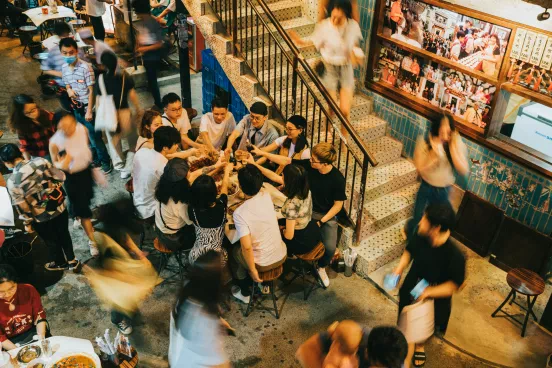
Founder Wen Bin, a Changsha native born in 1987, quit his job as a car salesman at 23. With just 5,000 RMB, he set up a stall on the bustling Pozi Street, selling fried skewers. In those early days, he was a one-man operation—prepping, cooking, and handling cash, working from afternoon until dawn with just three hours of sleep. But his secret recipes won over customers, and within three months, he was generating a daily turnover of 3,000 RMB.
It was around this time that Feng Bin, through a mutual friend, tried the popular stall. A shared late-night meal sparked a friendship.
As his stall gained fame, Wen Bin realized its limitations. On the advice of his supplier and friend Yang Ganjun, they partnered to open a 10-square-meter shop named "Wenheyou Old Changsha Fried Food" in 2011. It was another hit, and the "Wenheyou" name began to spread.
The business grew, adding crayfish, stinky tofu, and more—each a runaway success. By 2015, Feng Bin had wound down his own company to join full-time as a co-founder and CEO, defining the venture as a "cultural company."
The big leap came in 2018 with the 5,000-square-meter flagship in Changsha's Hisense Plaza, later expanding to 20,000 square meters. It recreated a sprawling 1980s Changsha neighborhood, complete with over 60 local street food vendors and nearly 150 replicas of period homes. Super Wenheyou was born.
Visitors from across China flocked to experience this deep dive into nostalgia, often remarking they had never encountered such an immersive, culture-powered dining environment. The numbers speak volumes: the Changsha flagship has become a major tourist destination, serving approximately 10 million visitors a year with an average table turnover rate of 8 times per day.
Having cemented its status as a Changsha super-IP, the brand looked outward. In 2020 and 2021, it launched in Guangzhou (5,000 sq m) and Shenzhen (over 20,000 sq m). The Shenzhen opening was particularly staggering, with first-day waitlist numbers exceeding 50,000.
CEO Feng Bin attributes the success to a clear strategy of cultural-tourism integration. "We've carved out a distinct path—creating communal spaces that fuse urban culture with local gastronomy," he has said.
Catering to a young, experience-seeking demographic, Super Wenheyou is already planning its next move, with a Nanjing location in design and further expansions into provincial capitals on the roadmap.
Why Changsha? Affordable Living and a Proliferation of Consumer Unicorns
Changsha has become a powerhouse for breeding standout consumer brands.
In June this year, Mojia Dimsum Bureau, a Changsha-born chain specializing in Chinese pastries, announced new funding, with Today Capital, led by veteran investor Xu Xin, coming on board. Just a year old, the brand is already valued over 1 billion RMB, with individual store valuations sparking industry envy.
Its founder, Wang Dan, a Changsha native and former TV director, turned to the pastry business in August 2020. Within a year, she opened over a dozen stores and closed four funding rounds, creating another hometown sensation.
Another local star, Hatchibutokoro, a premium pastry brand, is also on a rapid ascent. Having secured a new funding round last month, its valuation is reportedly around 2 billion RMB. The two-year-old brand has attracted a who's-who of investors including GGV Capital, Tiger Global, Sequoia Capital China, IDG Capital, and Challenger Capital.
Then there's Heytea, already a household name. Founded in 2012 by Lü Liang after several failed ventures, the brand's ancient Chinese aesthetic resonated deeply. Starting in 2018, it raised three rounds from investors like Tiantu Capital, Shunwei Capital, and Source Code Capital. In a market where rivals like Naixue have gone public and Heytea commands a 60-billion-RMB valuation, Heytea remains uniquely restrained. "Many investors are eager to fund them, but the founder isn't actively seeking capital," an investor close to the company revealed.
Changsha's track record is impressive: instant coffee brand Saturnbird (valued at 4.5 billion RMB), snack chain "Snack Busy" (450 stores), hot pot brand Shengxiangting, vintage photography studio Panzinüfang (planning an IPO), rice noodle chain Bamian, and community shopping giant Xingxing优选—all call Changsha home.
Why Changsha? A potent mix of fan culture, culinary heritage, and scenic appeal has created fertile ground for experiential brands, making it a top destination for young consumers and a city associated with high livability. Locals often link this "happiness index" to one key factor: affordable housing.
As a provincial capital, Changsha's average home price is around 11,136 RMB per square meter, while per capita disposable income exceeds 51,000 RMB. Its price-to-income ratio was just 8.5 in 2020—a fraction of that in Shenzhen, Beijing, or Shanghai. "It's a city that hasn't relied on real estate speculation for growth. That fosters an open, inclusive environment receptive to new ideas, which in turn supports a massive consumer market," observes a local entrepreneur.
This has made Changsha a must-visit for consumer-focused VCs. A prominent investor recently captured the sentiment: "Reviewing the scene a few years back, there wasn't nearly as much to see in Changsha. Now, I'm heading there specifically to scout new consumer brands." For the resilient, hard-working entrepreneurs of Changsha, the moment has truly arrived.