

Milestones
Market Cap Surpasses ¥66 Billion – Easyhome Successfully Completes Backdoor Listing, Harvest Capital Reaps Another Milestone | Harvest News
Date: 2019-12-27 Views:
Article Source: Investment Community
Original Author: Yang Jiyun
Consumption Forward Statement
The bell has rung for Easyhome’s listing—a decade of honing has culminated in today’s milestone, which in turn sounds the drum for tomorrow. True strivers never stop. The era of “good people doing business” has finally arrived. Entrepreneurs who earn their success through diligence will receive ever‑growing respect. It is in this spirit that people hold faith, the nation gains strength, and the country embraces hope.
The ¥35.6 billion backdoor listing of Easyhome has officially concluded. On December 26, Wuhan Zhongshang was renamed Easyhome, marking the company’s formal listing on the A‑share market. Its opening price reached ¥11 per share, with a market capitalization of ¥66.22 billion, once climbing to ¥69.41 billion.
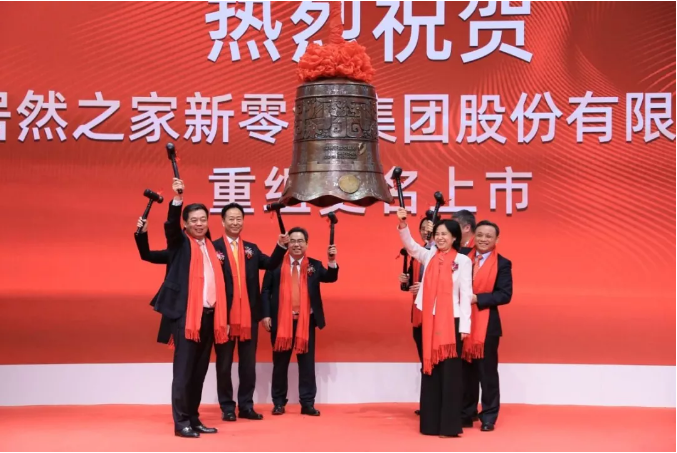
This concludes the nearly year‑long state‑owned backdoor transaction, in which Wuhan Zhongshang issued shares to acquire 100% of Easyhome New Retail Co., Ltd. for ¥35.65 billion. Following the transaction, Wuhan Zhongshang became the controlling shareholder of the listed company, and the actual controller changed from the Wuhan SASAC to **Wang Linpeng**.
Behind Easyhome emerged a constellation of prominent VC/PE institutions and industrial investors, led by Alibaba, Yunfeng Fund, Taikang Life, and Harvest Capital. As financial partners, PE/VC institutions such as Harvest Capital also served as a “capital‑market think tank” in this transaction, conducting extensive research and providing valuable insights on key decisions.
While state‑owned backdoor listings have been rare in the past, Easyhome’s process proceeded smoothly and was completed in a relatively short time—a model case.
As a leader in the home‑furnishing circulation industry, Easyhome New Retail has pioneered the new‑retail transformation amid consumption upgrading and economic transition, continuously enriching its “Ecosystem‑Wide Easyhome” positioning and realizing cross‑boundary integration across department stores, shopping malls, supermarkets, and home‑furnishing retail formats.
As a major institutional investor that invested ¥1.45 billion in Easyhome, **Harvest Capital** has been dedicated to infusing consumer‑sector expertise into Easyhome’s ecosystem and seeking new breakthroughs in traditional industries during this period of industrial upgrading.
Easyhome launched in 1999 as a small building‑materials market with less than 30,000 square meters of operating space and annual sales below ¥300 million.
Under Wang Linpeng’s leadership over the past two decades, Easyhome has grown into a large commercial chain group covering 29 provinces, municipalities, and autonomous regions nationwide. After receiving external equity investment in 2018, its store network expanded to over 300 locations. According to Wang Linpeng’s vision, Easyhome aims to “achieve a chain network of 600 stores by 2022, with sales exceeding ¥100 billion, and reach over 1,200 stores within ten years.”
In this specific backdoor transaction, Wuhan Zhongshang issued shares to acquire 100% of Easyhome New Retail for ¥35.65 billion. Post‑transaction, the company directly holds 42.60% of the listed company’s shares and indirectly holds 12.70% through its wholly‑owned subsidiary Huixinda Building Materials, becoming the controlling shareholder. The actual controller shifted from the Wuhan SASAC to Wang Linpeng.
Easyhome New Retail is the core home‑furnishing business subsidiary of Easyhome, operating Easyhome Home Stores, Livu Home Building Materials Supermarkets, and Easyhome Designer Services, all positioned in the mid‑to‑high‑end segment. Prior to the transaction, Wuhan Zhongshang’s main formats included modern department stores, shopping malls, and supermarkets—businesses that integrate well with Easyhome’s operations to form a new pan‑retail model.
On September 16, Wuhan Zhongshang disclosed Easyhome New Retail’s performance through June 2019. The announcement showed total revenue of ¥4.229 billion for January–June, up 8.92% year‑on‑year, and net profit of ¥959 million, an increase of 13.49%.
Easyhome has never positioned itself merely as a home‑furnishing retailer. Its digital and new‑retail transformation has made it a benchmark for many investors. After Alibaba and others took stakes in 2018, Easyhome’s new‑retail transformation accelerated, including the establishment of a dedicated new‑retail management department to drive organizational change. Despite challenges, Wang Linpeng remained resolute: “Let everyone stay calm—we must persevere.” Today, over 50 stores have completed digital upgrades.
In the A‑share market, Easyhome’s long‑standing competitor **Red Star Macalline** has held its ground. On January 17, 2018, Red Star Macalline, after more than two years on the Hong Kong market, officially returned to the A‑share market, becoming the first domestic home‑furnishing company to achieve dual listings in A‑shares and H‑shares. Founded earlier than Easyhome—in 1986, Che Jianxin (Che Jianxing) started a furniture workshop with five apprentices. Over 30 years, that young entrepreneur built a company with total assets of ¥800 million—an enviable entrepreneurial story.
After Easyhome accepted Alibaba’s investment, in October 2018, rival Red Star Macalline announced a strategic cooperation with Tencent, also centered on “smart retail.” Interestingly, Red Star Macalline—which initially aligned with Tencent—accepted investment from Alibaba in May 2019, making Alibaba its second‑largest shareholder.
In the relatively “late‑to‑digitize” home‑furnishing industry, the involvement of Alibaba and others has propelled the competition between Easyhome and Red Star Macalline into a new phase.
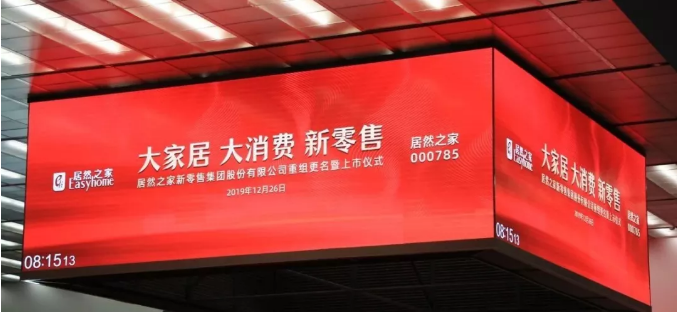
On December 23, Wuhan Zhongshang held its second extraordinary shareholders’ meeting of 2019. After the resolution passed, Easyhome formally entered Wuhan Zhongshang. Actual controller Wang Linpeng, former Wuhan Zhongshang helm Hao Jian, Wang Ning, and Alibaba’s Jiang Fan together formed the core leadership of the new company.
Discussing the deal, Wang Linpeng once remarked, “[Wuhan Zhongshang is] a shining, time‑honored brand. It would be a pity to limit it to one region. In the next three years, we will make Zhongshang a leading enterprise in China’s major‑consumption sector.” Founded in 1984, Wuhan Zhongshang has long been a landmark in the minds of Wuhan residents. Although reorganized with Easyhome and renamed in the securities market, this heritage brand will not disappear from shopping‑center facades.
Easyhome’s backdoor listing through Wuhan Zhongshang is also regarded as setting a new model for state‑owned‑capital backdoor transactions. “State‑owned backdoor listings were rare in the past, but this one proceeded quite smoothly and reached listing in a very short time,” Alan Song observed.
Reflecting on the entire process, Alan Song noted that the VC/PE behind Easyhome acted as a “capital‑market think tank,” conducting substantial research and offering valuable input on key decisions. He specifically highlighted that Harvest Capital also served as an important partner in internal management, value creation, and industrial integration.
Alan Song emphasized that Easyhome has created a new model for state‑owned‑capital backdoor listings—a testament to how strong enterprises can accelerate market entry and, through their own exploration, promote the maturation of China’s capital market. At the same time, China’s capital market is undergoing an exploratory transition from fragmentation to maturity, including the recent introduction of the registration‑based system—a crucial step in financial‑system reform that will release a wave of much‑anticipated “institutional dividends,” undoubtedly making the entire market more standardized and mature.
On its new‑retail transformation journey, Easyhome is steadily growing its wings. A market cap of ¥67 billion is only the beginning; another successful industrial story with a market value in the hundreds of billions is being written. Harvest Capital will continue to stand behind this industry leader, serving as a diligent, dedicated strategic partner—honored to grow alongside the champion.
Related information